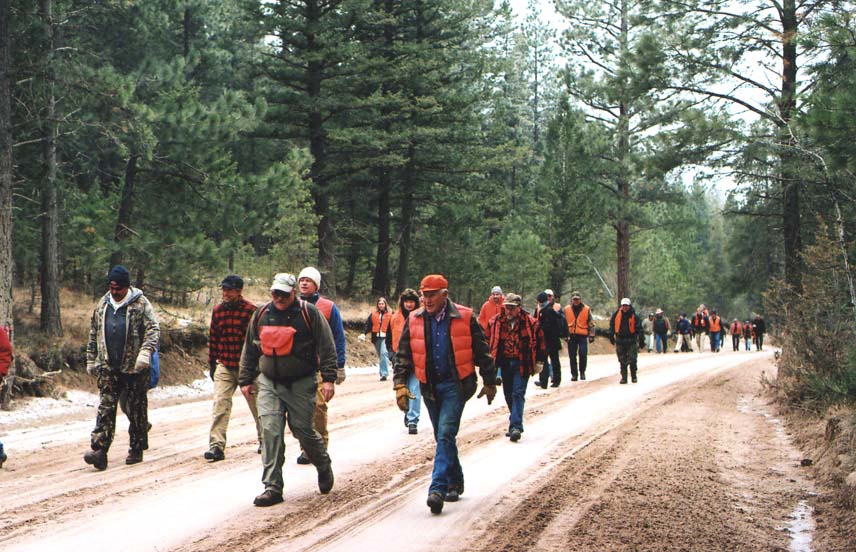
Roadless Flashback: Hunters & anglers hike 7 miles for Montana backcountry
On June 23, 2025, U.S. Agriculture Secretary Brooke Rollins announced that the Trump Administration was planning on rescinding the 2001 Roadless Rule.
During the scoping period this summer, USDA received 625,000 public comments. 99% of the comments opposed rolling back the Roadless Rule.
On August 29th, 2026, the USDA kicked off a 21-day official public comment period which ends September 19th, 2026. Now is the time for all of us to act and submit a public comment.
The proposed rollback of the 2001 Roadless Rule jeopardizes nearly 45 million acres of undeveloped backcountry forestland managed by the U.S. Forest Service, comprising around a third of the territory in our national forest system. These forests have only remained intact because of the Forest Service’s nearly 25-year-old commitment not to build roads in these areas for harmful activities like major logging operations or oil-and-gas drilling.
Montana hunters and anglers have stood up for roadless lands, wildlife, wild waters and the Rocky Mountain Front for generations. It’s our turn in 2026. Go to this link to submit a comment and honor the legacy of leading Montana hunters and anglers mentioned in this MWF press release from March 2006.
Its been said that some elected officials in Montana don’t believe that “real” Montana hunters and anglers actually care that much about the conservation of Inventoried Roadless Areas on National Forest lands or even the fate of public lands along Montana’s Rocky Mountain Front.
But MWF events in 2006 set the record straight.
Hunters and Anglers March 4 Roadless
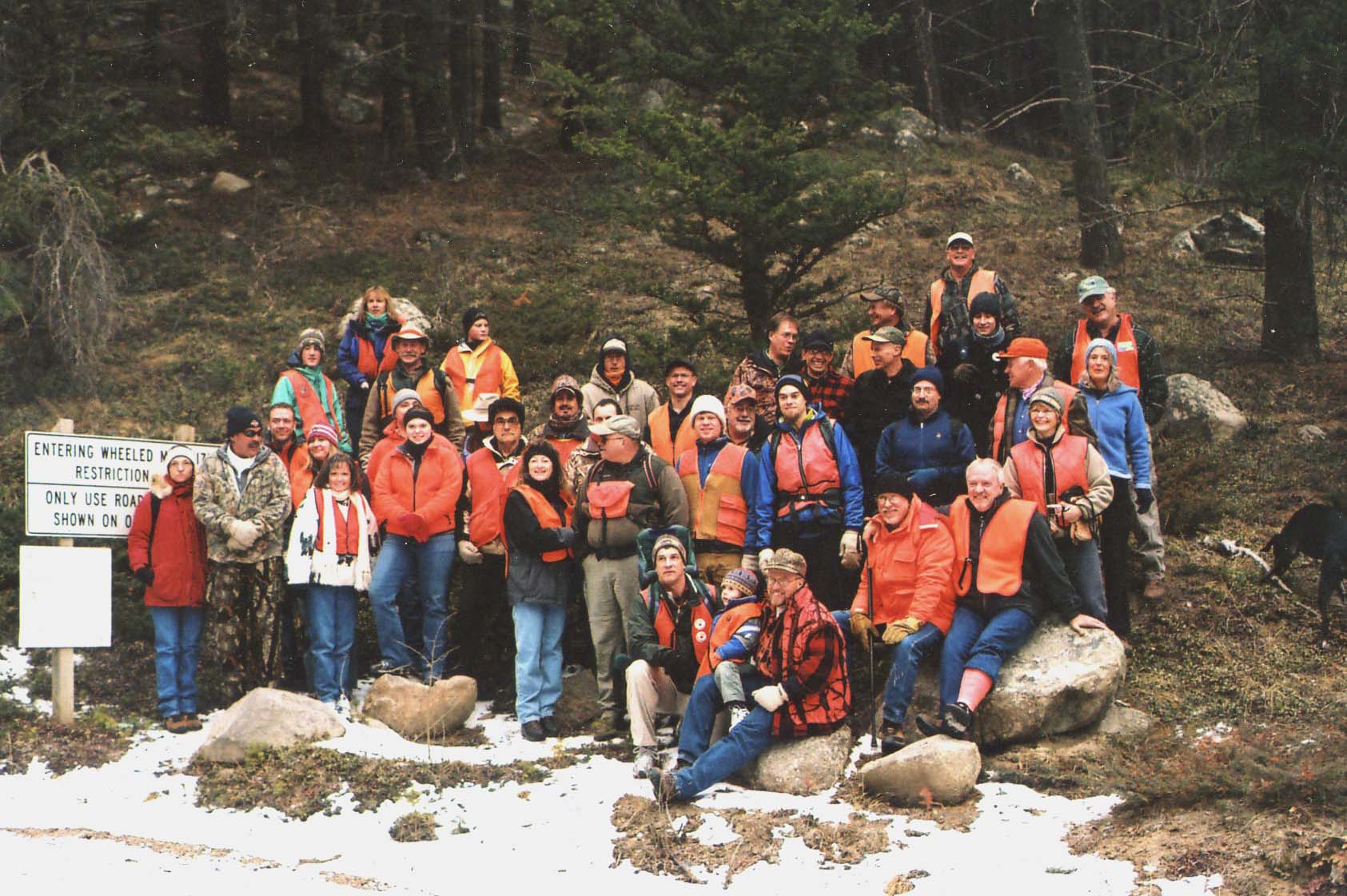
On March 4, a cloudy and sometimes sleety Saturday, more than 50 hunters and anglers walked nearly seven miles from the Black Mountain Roadless Area outside of Helena to the Capitol building where they met with Governor Brian Schweitzer.
The plan, originally hatched by Jim Posewitz of Orion: The Hunters Institute, was to hand deliver written recommendations to the Governor detailing why Inventoried Roadless Areas on National Forest lands need to remain in their current condition. The Capitol-March illustrated that hunters and anglers are not only concerned about the fate of Roadless Areas but care enough to walk seven miles to say so.
The goal fit perfectly with organized MWF efforts that include the organization of a statewide Hunters and Anglers Roadless Working Group that has been working on science-based recommendations for submittal to the Governor.
“We marched today to express our concern for these last roadless wild lands. Doing so is our ethical responsibility as hunters,” said Posewitz during his remarks at the event.
Kathy Hadley, an avid angler and Montana Wildlife Federation member, told the Governor and the crowd assembled that her new grandson deserves a Montana wholly different from states where lands free of roads were lost a generation ago. “Montana’s future generations should not be left with a place indistinguishable from Detroit or Los Angeles.”
Chris Marchion, President of Montana Wildlife Federation told the Governor, “Secure roadless habitat is the core of Montana’s world-renowned wildlife legacy. Maintaining the current condition of Roadless Areas is crucial to maintaining our five week general deer and elk season – the longest general season of all the western states.”
Marchion handed the Governor a written recommendation drafted by the Hunters and Anglers Roadless Working group and signed by 25 hunting and angling groups from across Montana representing thousands of “real” Montana hunters and anglers.
The event culminated with the Governor telling the group, “I see a group of people who are committed to the ideas of Theodore Roosevelt.” He continued, “Theodore Roosevelt stood up and said ‘I can’t accept it.’” The Governor was referring to the wholesale degradation of wildlife and their habitat during Roosevelt’s lifetime.
The Governor went on to say that the conservation of Roadless Areas is not a partisan issue, “conservation is an American value,” he said to the hunter orange wearing crowd. “The days of polarizing wild places are gone. We are the treasure state and there’s no greater treasure than our wild lands.”
Hunters and Anglers Support Protecting the Rocky Mountain Front
More than 400 Montana hunters and anglers signed a letter urging the state’s congressional delegation to protect fish and wildlife and fishing and hunting along the Rocky Mountain Front.
Russell Country Sportsmen, Montana Wildlife Federation and Trout Unlimited sponsored a press conference March 23, at Paris Gibson Square in Great Falls to discuss the letter and sportsmen’s efforts to protect the Front from further oil and gas development.
“Our professions vary from ranchers, business people, doctors, lawyers, engineers, wildlife professionals, to educators,” the letter states. “All of us share a common passion for hunting and fishing, and a love of the Rocky Mountain Front. We are writing to ask that as our elected senators and representative, you all work together to support the permanent protection of the Front from oil and gas development.”
Speakers at the event included: John Borgreen, of Russell Country Sportsmen and the Montana Wildlife Federation; Roy Jacobs, a Choteau taxidermist, former hunting guide and active member of the Coalition to Protect the Rocky Mountain Front; Kirk Evenson of Missouri River Flyfishers and Trout Unlimited, and Jim Posewitz of Orion: The Hunters Institute.
Posewitz told reporters, “The Front is a place that has been called the North American Serengeti, an unneeded comparison. It is a remarkable place that is the physical expression of the conservation ethic held by Montana people – there is nothing it needs to be compared to or measured against – it is who we are. Our conservation ethic demands that we NOT put these resources at risk for some fleeting prospect of a passing economic blip. The wildlife and wild land resources of the Rocky Mountain Front – are in fact – priceless…the existing oil and gas leases…should be terminated.”
“We want to send a clear message to Senators Burns and Baucus and Representative Rehberg, that there is a strong diversity of grassroots hunters and anglers, from all walks of life, who support the permanent protection of the Rocky Mountain Front,” said Craig Sharpe, executive director of MWF. “In others words, their constituents here in Montana will support any efforts to protect this special, wild place.”
In the late 1990s, the U.S. Forest Service withdrew most of the Front from new oil and gas leasing, but there remained old leases that could still be developed. Last summer, in response to concerns expressed by Montana residents, U.S. Secretary of Interior Gale Norton temporarily suspended development of existing leases. The letter signed by hunters and anglers urges Montana’s congressional delegation to “seek common sense solutions, such as trading or buying out existing leases” to permanently protect the Front.
“We all use gas and oil, and we all support responsible energy development,” said David Stalling of Trout Unlimited. “However, some places are simply too important for fish and wildlife to drill, and the Rocky Mountain Front is one of these places.” ◆