Out of state politicians trying (again) to take over Montana’s national forests

stalling-wildlife Photo Credit: Dave Stalling

First it was the Utah politicians who wanted to take over Montana’s national forests. Now, it’s the Idaho politicians.

Idaho Representative Raul Labrador’s “Self-Sufficient Community Lands Act” (H.R. 2316) has a clever name, and is couched as using collaborative groups’ work to improve public land management. But in truth, it would hand control over our national forests to an unaccountable local committee and exempt all logging or other natural resource work from bedrock environmental laws. The bill throws out the idea of multiple use and disregards any standards for wildlife, fisheries, clean water, and public access.

Representative Labrador has said that his bill was conceived by a group of county commissioners from Idaho and that its primary purpose is to promote the idea that management of national forests should be handed over to state and local control. Like other proponents of “transferring” our national lands to states, Labrador claims this would improve management and put money in the coffers of local counties, without harming public access for hunting and fishing. It just sounds too good to be true, and that’s because it is.

In fact, the Labrador bill would pave the way for up to 4 million acres of national lands to be designated as “demonstration areas” under the management of a four-person local committee. The politically-appointed committees would have complete control over these formerly public lands. And the lands there would be exempt from all environmental laws, including the Clean Water Act that protects our coldwater streams and rivers, as well as other key laws including the National Forest Management Act and the Endangered Species Act.

Local collaboration is crucial to effective national forest management. As someone who recently started serving on a collaborative group, I can say that H.R. 2316 has nothing to do with local collaboration and everything to do with bulldozing the public off of our lands.

Authentic collaborative groups involve a broad group of stakeholders, ensuring that everyone has a voice. They hold in-depth, public meetings in which everybody is heard. They review issues thoroughly and according to the best science. They have subcommittees that take more in-depth looks at specific areas or issues. They hash out the details of projects.

Only after extensive work does a local group’s recommendation go forward to the public land agency. The public still has all the channels to make its voice heard and give input on projects, which are implemented in full compliance with federal environmental laws.

Forest management projects put together by local collaborative take time, but they’re worth it. They’ve had the input of conservationists, ranchers, loggers and local government officials, and they’re more likely to stand up to challenges because that’s been considered in the process. And we have plenty of examples from all over Montana of how local collaboration can improve forest management.

Unfortunately, Representative Labrador’s bill would reject authentic local collaboration and effective national forest management in order to push an ideological agenda to transfer national forests to state and local control. Our public lands are too important for political experiments.

Nick Gevock is the Montana Wildlife Federation’s conservation director.

Public Land Debate: State Takeover Remains an Unpopular, Unworkable Idea

MWF Lauds Governor’s Plan to Protect Montana’s Public Land Heritage

mountain-mamas-479 Photo courtesy of Montana Mountain Mamas

Our public lands are crucial to Montana’s heritage and our economy. Montanans hunt, fish, camp, and hike on public lands more than anybody else in the nation. Our access to the outdoors is why we live here, and it’s why tourists from all over the world visit Montana. Just last week, a poll found that 83 percent of Montanans believe that public lands are important for “protecting our culture and heritage.”

Over the last few years, Montanans from across the political spectrum have been working together to fight against proposals to transfer and sell off our public lands. These proposals are being advanced by special interests who believe that our public lands should be developed and sold off instead of protected for future generations. Thanks to the hard work of thousands of Montanans, we have stopped the public land grab dead in its tracks. Not a single bill has made it through the Montana Legislature, and our Congressional delegation is united in opposition to this idea at the federal level.

But fighting bad ideas isn’t enough. We also need to push forward to expand public access the outdoors and protect more lands for future generations. Our heritage, our economy, and our Montana way of life depend on it.

Today, Governor Steve Bullock announced a plan to defend and improve public access to public land in Montana. The Governor has called for:

• Continued vigilance against the transfer and sale of our public lands
• Full funding of Habitat Montana, which uses hunting license fees to open up access and protect habitat
• Creating a new Office of Outdoor Recreation to support outdoor economic development
• Creating a Public Access Specialist who will work to address specific problems with land and water access

These proposals will help Montana’s hunting, fishing, and outdoor heritage and support our economy.  Now we need to work to get our Legislature and other Montana leaders on board.  You can send a message to the Governor about his plan by visiting mtgreatoutdoors.org.

The Blackfoot Clearwater Stewardship Project: Helping Keep Montana . . . Well, Montana!

bcsp new2
It’s not often you see the Blue Ribbon Coalition – an organization that promotes off-road vehicle use – working with the Montana Wilderness Association and the Montana Wildlife Federation. But the Blackfoot Clearwater Stewardship Project (BCSP) is that kind of project. Hunters, anglers, outfitters, guides, snowmobilers, ranchers, loggers, local businesses, county commissioners and numerous others have joined forces to cut through the contentious divisiveness that hinders public land management today and reach common ground. As Connie Long of Bob Marshall Wilderness Outfitters puts it: “This is a grassroots, made-in-montana, collaborative project.”

For hunters and anglers, that’s good news. The West Fork of the Clearwater River, the North Fork of the Blackfoot, Monture Creek, the Wild Swan Front, Grizzly Basin . . . this beautiful landscape and its rivers sustain wild elk, mule deer, whitetail, bighorn sheep, native westslope cutthroat, bull trout and an abundance and diversity of other wildlife. The BCSP will help ensure it remains that way, protecting and enhancing Montana’s hunting and angling heritage while also helping to maintain and create jobs in the forest and recreation industry and support a healthy, viable community.

The project has already resulted in the creation of 138 jobs, bringing $33 million into the local economy through forest health and restoration efforts, reducing noxious weeds, restoring streams and selective, sustainable logging. It also entails the creation and maintenance of about 2,000 miles of multiple-use trails and the addition of 83,000 acres to the Bob Marshall, Scapegoat and Mission Mountain Wilderness areas. In other words, there’s something for everybody. This cooperative effort will help ensure the Blackfoot Clearwater area remains a good place to live, work, visit, hunt, fish, hike, backpack, snowmobile, and otherwise enjoy. It helps keep Montana . . . well, Montana!

This is why the Montana Wildlife Federation (MWF) has supported this effort for nearly a decade and is part of the coalition calling for congressional action to make the BCSP official.

How can you help? We’re asking everyone who supports this effort to contact the Montana Congressional delegation – Senators Jon Tester and Steve Daines, and Congressman Ryan Zinke – and urge them to introduce and support legislation that will implement the BCSP.

“It’s a project we all agree on,” says Loren Rose of Pyramid Lumber. “It’s time to get it done.”

To learn more about the Blackfoot Clearwater Stewardship Project and how you can help, please check out: http://www.blackfootclearwater.org

Montana Hunters and Anglers Applaud Wildlife Commission’s Endorsement of Blackfoot Clearwater Stewardship Project

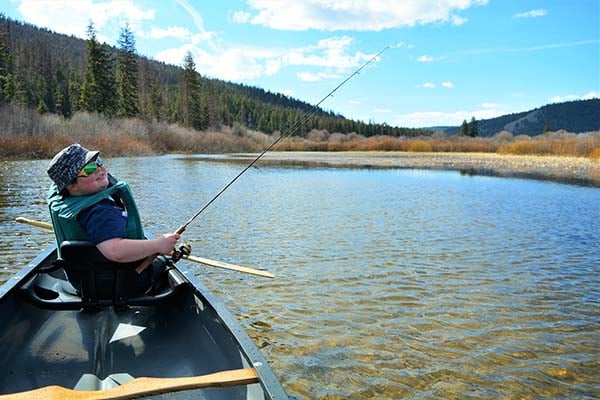
DSC_3205 Photo Credit: David Stalling & son fishing for trout within the proposed recreation area of the BCSP

The Montana Wildlife Federation applauds today’s decision by the Montana Fish and Wildlife Commission to support the Blackfoot Clearwater Stewardship Project (BCSP). The five-member, governor-appointed citizen committee, which oversees the Montana Department of Fish, Wildlife and Parks, voted unanimously today to approve a resolution endorsing the effort.

“The commission’s support recognizes the value of this cooperative project for Montana’s fish and wildlife, and hunting and angling heritage,” says Kathy Hadley, president of MWF. “It’s a great example of local citizens coming together to reach balanced compromises that protect and enhance healthy forests, fish, wildlife, hunting, angling, other recreation, jobs and traditional Montana values.”

The BCSP is made up of a variety of individuals and organizations of diverse backgrounds – including ranchers, loggers, hunters, anglers, county commissioners, snowmobilers and environmentalists – to shape the management of our public lands in and around the Seeley-Swan Valley. MWF is a partner and strong supporter of the project.

“By working together, we are cutting through much of the divisive, partisan rhetoric that shapes so much of our public lands management today,” says Mack Long, a hunter, guide and owner of Bob Marshall Wilderness Outfitters, “and showing that we, the people on the ground, can achieve workable and viable solutions.”

Project partners are urging Montana’s Congressional delegation to introduce legislation to approve and implement the BCSP.

To learn more, visit the Blackfoot Clearwater Stewardship Project

Tongue River Railroad Permit Denied

BONOGOFSKY-7107-140701web Photo Credit: Alexis Bonogofsky photo of Tongue River Valley

After decades of protest from ranchers, sportsmen, and conservationists, the Surface Transportation Board just denied the permit for the proposed Tongue River Railroad. The TRR would have fragmented some of the best wildlife habitat in the state to ship Montana coal to Asia.

The Surface Transportation Board decided to “deny TRRC’s request to hold this proceeding in abeyance and instead dismiss the proceeding without prejudice. At this time, there appears to be little prospect that Otter Creek Coal’s mine permit will be secured in the foreseeable future. Otter Creek Coal and its parent, Arch, have both filed for bankruptcy, and Otter Creek Coal has suspended its application for an MDEQ mining permit indefinitely.”

This is another huge victory in protecting the Tongue River Valley from development. This agricultural valley provides ranchers and farmers the ability to carry on the traditions of past generations. The Tongue River Valley also provides some of the best habitat in the country, with pheasants, pronghorn, and trophy mule deer calling the valley home. Hunters and anglers should rejoice to know that this valley will continue to be a paradise, where future generations will be able to wet their lines and chase game.

Jeff Lukas – MWF Elk Campaign Manager

Jeff Lukas

Conservation Director

Jeff Lukas is a passionate conservationist who has been fishing and hunting his entire life. Whether it’s floating a small stream chasing trout, pursuing elk in the high country, or waiting in a blind for ducks to set their wings, Jeff is always trying to bring more people afield to show them what we are trying to protect. He loves being in the arena, and he will never shy away from conversations about the beautiful and unique corners of Big Sky country.