Now is the time to speak up for Montana’s backcountry, wildlife & fisheries

The administration gave the public just three weeks to weigh in on a proposal that will negatively impact the management of 6 million acres of Montana backcountry. The proposal threatens to disrupt elk distribution, compromise the headwaters of our blue-ribbon trout streams and clean drinking water, and fragment habitat for Montana’s wildlife that depend on undisturbed backcountry, such as bighorn sheep, mountain goats, grizzly bears, lynx, wolverines, Harlequin ducks, bull trout, and more. Three weeks simply isn’t enough time for hunters, anglers, local communities, and conservationists to have our say.

Here’s what we need to do right now:

1. Ask the USDA to extend the public comment period, which is scheduled to end on September 19th. Submit your comment directly through the Federal Register here. Tell USDA to keep the Roadless Rule in place, extend the comment period, and protect the public lands and wildlife that define our way of life.

2. Call Montana’s congressional delegation. Tell them to stand up for YOUR backcountry and headwaters and Montana’s wildlife.

Senator Steve Daines (406-245-6822)

Senator Tim Sheehy (202-224-2644)

Representative Ryan Zinke (202-225-5628)

Representative Troy Downing (202-225-3211)

You can also use the form below to send a note to your Congressional delegation and demand they take action.

Your federal elected officials are also influenced by Montana’s County Commissioners. Use this link to look up the contact information in your county, and ask your County Commissioners to take action.

Now is the time to speak up to keep Montana’s backcountry open, intact, and teeming with fish and wildlife.

Here are some facts to counter misinformation.

Opposition to the Roadless Rule comes from misinformation that roadless areas “lock up” these areas and prevent management. This is false. Here are the facts about USFS roadless areas in Montana:

The Roadless Rule was enacted in 2001 after 430 public meetings with more than 23,000 people attending. More than 1.6 million public comments were received, and 95% of these comments supported roadless lands protection. 

  • Since the 2001 roadless rule went into effect, more than 188,393 acres of hazardous fuels treatments have been conducted in roadless areas in Montana. This is 20% of the hazardous fuel treatments in Montana since 2001.
  • 93% of summer elk habitat is within roadless areas. These roadless lands are critical to the health of our elk populations in Montana. Roadless lands provide secure habitat that allows us to have 5-week elk seasons in Montana. Withdrawing the roadless rule will require the shortening of Montana’s elk season to the detriment of all elk hunters. 
  • Many roadless areas are open to motorized trails and use by ATVs and other such motorized uses. In fact, 32% of the motorized trails on USFS lands in Montana are in roadless areas.
  • Roads negatively impact trout and trout streams through sediment, pollution, and altered stream channels. 79% of roadless lands in Montana are home to native trout like Westslope cutthroat trout, bull trout, and Yellowstone cutthroat trout.  
  • Roadless lands provide secure areas from human-caused forest fires because 78% of human-caused fires on USFS lands occur within a half-mile of a road. 85% of all wildfires are human-caused. 
  • Grazing allotments are an important factor in Montana roadless areas. 2.2 million acres of grazing allotments occur in roadless areas in Montana – this is 33% of all grazing allotments on USFS lands in Montana. 
  • More than 90% of roadless areas in Montana are recognized as having low or very low potential for energy development. The 2001 roadless rule recognizes valid existing rights for oil and gas development, and it does not prohibit new leases. 
  • There are already more than 370,000 miles of existing roads on National Forest lands. The USFS currently has $8.6 billion in deferred maintenance on existing USFS roads. This means the USFS cannot come close to maintaining all the roads they currently have, never mind building new roads.

Use the form below to send a message to Steve Daines, Tim Sheehy, Ryan Zinke, and Troy Downing

Defend Roadless Rule

Elk photo credit: Mathew Schwartz

Roadless Rule Repeal Threatens 45 Million Acres of National Forest: What Hunters and Anglers Stand to Lose

On Aug. 27, U.S. Secretary of Agriculture Brooke Rollins announced that the U.S. Department of Agriculture (USDA) is moving forward with plans to rescind the 2001 Roadless Rule. A notice is now live on the Federal Register, where the public can comment on the repeal in a mere three-week window, from now until Sept. 19.

The proposal would lift roadless protections from nearly 45 million acres of roadless national forest lands across the country, including more than 6 million acres in Montana. For hunters, anglers, and outdoor enthusiasts, the stakes could not be higher.

“Montanans have consistently supported strong protections for our backcountry lands,” said Mike Mershon, board president of the Montana Wildlife Federation. “Rolling back the Roadless Rule would not only put elk and native trout at risk, it would also strip away the very opportunities that make Montana special. We need more time to ensure our voices are heard.”

(Learn more about the Roadless Rule here.)

What’s at Risk

Since its creation nearly a quarter century ago, the Roadless Rule has safeguarded large, unfragmented areas of national forest by generally prohibiting new road construction. These lands include headwater streams that feed Montana’s rivers, critical elk security habitat, and some of the most sought-after backcountry hunting and fishing destinations across the country—and in Montana.

These forests only remain intact because of the Forest Service’s commitment not to allow roads for destructive industrial activities like major logging or oil and gas drilling, although the rule already provides access for pre-existing oil and gas leases, and new oil and gas leases can be accessed through directional drilling.

Rescinding the rule would open the door to large-scale development that would fragment habitat, pollute waterways, and forever change the character of places generations of Americans have relied on for solitude, fish, and game.

Let’s be clear: the Roadless Rule is flexible: it allows for off-highway vehicle riding on existing trails, firewood cutting, grazing, and active management projects such as thinning and prescribed burning. It is not wilderness. In fact, the Forest Service and its partners have used the Roadless Rule framework to carry out hundreds of restoration projects in Montana that improve forest health and fish habitat while supporting rural jobs.

These areas are vital for wildlife, and they’re also used for recreation by millions of Americans. Roadless areas protect more than 43,000 miles of trail, over 20,000 mountain biking routes, 11,000 climbing routes, and more than 1,000 whitewater paddling runs. Large sections of the Continental Divide Trail, the Pacific Crest Trail, and the Appalachian Trail cross through them. Rolling back protections would jeopardize access to some of the most iconic outdoor experiences in the country.

Fire and Forest Health

Proponents of repealing the Roadless Rule have argued that it limits wildfire suppression efforts. However, a 2025 study found that logging and road building disrupts forest ecosystems, leading organic materials to become more flammable. In short, wildfires are far more likely to start near roads. New research from The Wilderness Society, now in peer review, shows that from 1992 to 2024, wildfires were four times as likely to start in areas with roads than in roadless tracts. Seventy-eight percent of human-caused fires on National Forests nationwide start within a half-mile of a road (85% of all wildfires are human-caused).

The Roadless Rule already allows for fire mitigation using mechanized thinning and prescribed burning. Since the Roadless Rule was enacted in 2001, more than 188,000 acres of Montana’s roadless lands have been treated for hazardous fuels reduction, representing more than 20% all treatments in our state during this timeframe.

Without the rule, these areas would be vulnerable to new roadbuilding that fragments wildlife habitat, degrades water quality, and pushes elk onto private lands where public access is often limited. Hunters who rely on these areas to find solitude and game would see those opportunities diminish.

Mike Mershon
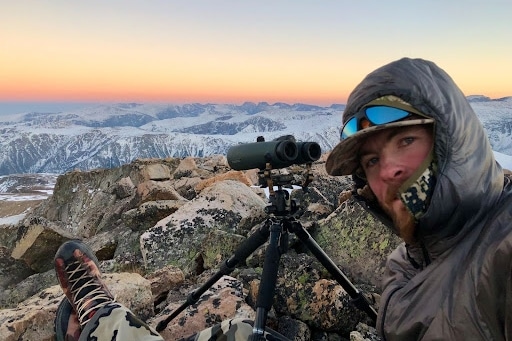
Roadless areas provide irreplaceable big-game habitat and security cover which keeps big game species on public land and provide the backcountry experiences many hunters seek. Photo by Mike Mershon.

Why Hunters and Anglers Should Care

For sportsmen and women who lace up our boots at 4 a.m. and walk into the dark to hunt elk, the connection is clear: fewer intact landscapes mean fewer elk on public land, less secure cover for wildlife, and more hunters stacked up at the same crowded trailheads. Elk rely on secure habitat to avoid heavy hunting pressure, and roadless lands provide exactly that. According to the USDA’s own data, fewer roads correlate directly with more elk and greater hunter satisfaction.

Hunters know this and the outdoor industry has built entire tools around it. Recently, GOHUNT rolled out a new mapping feature — a Road Density layer — that they’re calling a “game-changer” for finding elk away from pressure. Montana-based OnX has offered a roadless layer for years, making it easier for hunters to identify the very places the Roadless Rule was designed to protect. These tools are popular because they point hunters toward opportunity: the intact, unroaded landscapes where elk still behave like elk and where hunting traditions can be passed down.

For anglers, the stakes are just as clear. Roadless areas shelter the headwater streams where native trout and salmon still hold on. These are the places worth a backcountry trek with a fly rod strapped to your pack—rivers shaded by old-growth spruce and fir, where the water runs cold enough to sustain fragile species. Industrial logging threatens that balance. Logging proposals often target the biggest, oldest trees—the very ones that store the most carbon, create a canopy that cools stream temperatures, and sustain entire aquatic ecosystems. The same roads that scatter elk herds also bleed sediment into streams, smothering spawning beds. What’s left is warmer water, fewer trout, and the slow unraveling of fishing traditions that depend on intact watersheds. Removing them would mean a direct hit to climate resilience, fish habitat, and big game security.

More Roads, More Costs

The value of roadless country stretches beyond our elk and native trout. Across the United States, national forests supply drinking water to more than 60 million people. Opening these lands to development is an invoice to taxpayers, who will be left paying for filtration plants and restoration projects once clean water sources are compromised.

On top of that, we don’t have the resources to manage the roads already in existence. The Forest Service already manages 380,000 miles of roads through national forests—twice the length of the national highway system. The agency has a multibillion-dollar backlog of maintenance needs for this network, and ongoing staff shortages mean it cannot even manage what exists today. Building new roads in backcountry forests would saddle taxpayers with billions more in costs and maintenance liabilities.

These roads would also fragment big-game migration corridors, undermine habitat security for species from elk to grizzlies, and put culturally important hunting, fishing, and gathering areas at risk.

TAKE ACTION

The administration has given the public just 21 days to weigh in on a proposal that would reshape the management of nearly one-fifth of the National Forest System. That is simply not enough time for hunters, anglers, local communities, and conservationists to have their say.

The public comment period runs only through Sept. 19. Public comments will be considered during the development of the draft environmental impact statement, and additional opportunities to comment will occur as the rulemaking process continues, according to the USDA.

If you care about keeping Montana’s backcountry open, intact, and teeming with fish and wildlife, now is the time to speak up.

You can submit your comment directly through the Federal Register here. Tell USDA to keep the Roadless Rule in place, extend the comment period, and protect the public lands that define our way of life.

Legal Victory Strengthens Public Trust Doctrine, Elk & Game Management in Montana

Joint Press Release by All Intervening Organizations

In a major legal victory for the State of Montana, hunters, and conservation groups, a District Court judge has sided with the public and Montana Fish, Wildlife, and Parks (FWP) in a lawsuit attempting to upend Montana game management. The ruling bolsters the State and conservation groups in their fight to protect Montana’s game management practices, affirming the Public Trust Doctrine and ensuring that our wildlife remains public, not a private commodity.

Tenth Judicial District Court Judge Gregory R. Todd denied the United Property Owners of Montana’s motion for partial summary judgment on Tuesday afternoon and granting FWP and Intervenors cross-motions, agreeing wholeheartedly with the state and coalition’s arguments that the Montana Fish and Wildlife Commission and the Montana Department of Fish, Wildlife & Parks have been following state wildlife management laws correctly.

The coalition of intervening groups, composed of Helena Hunters and Anglers, Hellgate Hunters and Anglers, Montana Chapter of Backcountry Hunters & Anglers, Montana Bowhunters Association, Montana Wildlife Federation, Public Land Water Access Association, and Skyline Sportsmen Association, called the lawsuit “an attack on wildlife management and Montana’s egalitarian hunting traditions.” The groups filed a motion to intervene on behalf of Montana Fish, Wildlife & Parks, Montana hunters, and all citizens of Montana.

The intervening groups, granted legal status in this case in September 2022 by the District Court in Fergus County, represent Montana hunters, anglers, public lands users, and all who have a stake in defending the public interest. They are committed to maintaining long-term, proven wildlife management that benefits all Montanans. All have a strong record of public participation in decisions affecting Montana’s natural resources and hunting heritage. Learn more at KeepElkPublic.org. Conversely, UPOM is an organization with a history of opposing Montana’s tradition and law that guarantees wildlife is equally owned by the public, not just the wealthy, well-connected, and landed gentry.

UPOM’s failed lawsuit alleged that the public process for managing elk and setting hunting regulations in Montana is unconstitutional. It attempted to force FWP to reduce elk numbers in the state substantially by killing upwards of 50,000 animals and giving politicians and private landowners management authority over public wildlife management. Similar attempts by UPOM at the legislative and commission levels have been strenuously opposed and largely defeated again.

Coalition members thank their attorneys, Rob Farris-Olsen, Graham Coppes, Kim Wilson, and state attorneys for defending the public’s interest. They vowed to keep fighting for responsive wildlife management and public hunting opportunities. The groups look forward to defending the Public Trust Doctrine, the North American Model of Wildlife Conservation, and keeping elk public in the upcoming 89th Session of the Montana Legislature.

“This is a significant decision. The Court upheld the fundamental concept of public trust wildlife, managed by wildlife professionals at Montana FWP, for the benefit of all citizens,” said Steve Platt, president of Helena Hunters and Anglers. “We are happy that the Court upheld this bedrock premise of the North American Model of Wildlife Conservation.”

“UPOM’s misguided lawsuit threatened serious consequences for how we manage Montana’s elk and public hunting opportunities going forward,” said Andrew Gorder, president of Hellgate Hunters & Anglers. “The Court’s decision is a hard-earned victory for our state’s wildlife managers and upholds Montana’s long history of managing public elk for the benefit of all, not just a select few.”

“I am proud of the hard work we have done over the last year, engaging with the state, public hunters, and landowners in a sincere and transparent effort to solve these wildlife management issues,” said John Sullivan, chair of the Montana chapter of Backcountry Hunters & Anglers. “We are grateful the court has acknowledged the public’s role in wildlife management and allowed us to intervene on the public’s behalf. We look forward to making our case in front of the court and in the light of day for all to watch.”

“Montana Wildlife Federation appreciates the time and attention to detail the Court put into this historic, precedent-setting victory for science and fairness in game management,” said Chris Servheen, Montana Wildlife Federation President and Board Chair. “We are proud to have successfully strengthened the Public Trust Doctrine and the North American Model within Montana law. We will continue to work with these intervening organizations, the State of Montana, and many more to further strengthen these sound principles.”

“PLWA is ecstatic about this decision and its implications for the science-based management of our public trust resource in Montana,” said Alex Leone, executive director of Public Lands and Water Access Association. “The decision affirms that elk in Montana are to be managed for the benefit of all, not just a few aggrieved landowners. This is not the first time UPOM has attempted to challenge Montana’s long-standing tradition of public access to public trust resources, and it won’t be the last. We are proud of MT FWP and the coalition of intervenors for stepping up and prevailing.”

“The MBA is very grateful to the many groups, their leaders and the attorneys involved who have put in the time to fight against this lawsuit. A special thanks goes out to the courts for upholding the status of the FWP professionals managing our wildlife in Montana. We need to continue to fight for our future generation of Montanan hunters and assure they will have a fair opportunity to hunt game in this great state,” said Ken Schultz, President of the Montana Bowhunters Association.


###

Father’s Day Reflections at The Stump

By Tom Puchlerz, Montana Wildlife Federation Board Member

We all have special places in the sporting world where memories are made and friendships are cemented. My place is the Stump.

My closest friends know the Stump, some better than others, but all have made memories there. For some, it was seeing hordes of trout moving into the riffle, gorging on flies—from the lumbering skwalas and early drakes of spring to the minute tricos of summer. For others, it was getting a look from the wise old brown sipping mayflies under the branch on the far bank where only the finest cast and drag-free drift can get him to take. We all know the spot, just downstream from that light-colored rock by the clump of grass.

IMG 3585 1 1
Montana Wildlife Federation Board Member Tom Puchlerz fly fishing with his grandchildren, Ember and Henry.

I fish the Stump often as it is part of my home water, just out the door and a pleasant wade upstream. The Killdeer are always there to greet me with their raucous call, and my friends, the Quail, speak to me from the tangles of willow under the towering pines and cottonwood.

I fish that stretch of river that holds the Stump every Father’s Day, and this year was no different than the many that have flowed by over the years. As I walked up the river, I thought of my friends that I had taken up to the Stump. Yes, there have been many great fish caught at the Stump, but it is the other things that I hold dear. It’s a friend’s first trout in Big Sky country. It’s the day you just couldn’t figure it out, and the walk home is one of wonder and appreciation for the quarry. It’s those earthy cigars shared with your friends on the bank across from the Stump as you talk about flies and fish, the wonderful place they call home, and how fortunate we are here on my home water.

IMG 4134 1

My Father’s Day at the Stump this year was one that will be etched in my memory for the remainder of my time on the water. I arrived mid-afternoon with the sky as blue as blue can be, the mountains still holding on to the remnants of last winter’s storms, and the river as clear as the gin I will partake in at the end of the day with family and friends. The water was visually still as I approached the pool beneath the Stump, and the first indication of fish was the sounds, not the sight, of feeding fish.

IMG 1551 2
Tom’s granddaughter, Ember, enjoying time on the water.

This was not the subtle sip I often hear, but gorging, slurping, surging sounds coming from water less than knee-deep, just above the Stump. Once my visual senses kicked in, I could see rise after rise across the riffle. Delicate mayflies hidden amongst the snowy seeds of the cottonwood were on the menu for the trout that call the Stump home. Today would not be a day of precise presentation and the perfect imitation; it was one of getting the fly on the water and being hair-triggered for the take. And so, it was. The first take launched a heavy, broad-shouldered brown as long as my forearm into the air and onto my leader. I never touched him, but he touched my heart and will remain as another memory at the Stump. There was the beautifully colored brown with crimson spots and golden belly and the rainbows that lit up the already beautiful western sky.

I stopped after a handful of truly grand trout and watched my son-in-law, the father of my grandchildren, try his hand at making memories at the Stump on this glorious day for the fathers.

There are memories, and there are memories yet to be made with friends and family. I can hardly wait to introduce my grandchildren to the Stump and the special things that happen at such places. They might even catch a trout.


2nd Annual Montana Women’s Ice Fishing Clinic

By MWF Communications Coordinator Cameron Evans and North-Central Field Representative Morgan Marks. 

DSC03374
The sunrise marked the start of the second annual Women’s Ice Fishing Clinic hosted by the Montana Wildlife Federation and Artemis Sportswomen. Photo by Cameron Evans

The sky over Canyon Ferry Reservoir cast cotton candy clouds onto a thick layer of ice as dawn broke on Saturday, Feb. 25. The pink skies welcomed a group of women who gathered near a boat launch for the second annual women’s ice fishing clinic hosted by Montana Wildlife Federation and Artemis Sportswomen.

More than 30 women of all ages and experience levels bundled up and gathered before dawn in 10-degree weather for the clinic.

IMG 1298
Participants gather near the boat launch at Canyon Ferry Reservoir. Photo by Ilona Wilde

The women circled up, coffee mugs in hand, for introductions and a lesson on ice safety and staying warm before taking to the ice. Some women were avid ice anglers, some had been out a time or two with friends, and others were completely new to fishing.

With help from volunteer instructors Stephanie Adams-Clemen (Montana Fish Wildlife & Parks State Trails Coordinator), Kimberly (Berly) McCoy (an avid ice fisher and science podcast producer NPR’s daily science show, Short Wave), Katie Vivian (Montana Fish Wildlife & Parks Region 4 Fisheries Biologist), and Jessi Gudgel (Montana Fish Wildlife & Parks Aquatic Invasive Species Monitoring Specialist), the women rigged up ice fishing rods and shimmied like penguins across the ice to holes that the instructors had drilled by the light of headlamps earlier that morning.

DSC03384
Stephanie Adams-Clemen sets up an automatic hookset tip-up. Photo by Cameron Evans

Each instructor came from a different background.

The event would not have been possible without its hosts: MWF and Artemis, the volunteer instructors, MWF staff who helped organize the event (Field Representatives Morgan Marks and Ilona Wilde, and Communications Coordinator Cameron Evans) and, of course, the event’s sponsors.

The sponsors for this event included Blackfoot River Brewery in Helena, North 40 Outfitters (which has locations in Great Falls and Havre, as well as other locations outside Montana), and Helena Tourism Alliance in Helena. We’re incredibly grateful for their support and community ethics.

As women began to fish, instructors went around offering lessons and advice and pausing for demonstrations. Instructors showed participants how to drill holes using an auger, how to add powerbait to a hook, how to tie basic knots, how to jig, and how to handle fish.

DSC03445
Katie Vivian, a volunteer instructor and fisheries biologist in Choteau, demonstrates how to use a tip-up. Photo by Cameron Evans

It wasn’t long before rods started to bend, with nearly a dozen healthy 2-3 pound rainbow trout caught by the group that day. Some women caught fish jigging, while others ran over to automatic hooksetters that the instructors had set up.

IMG 1358
Katie Vivian holds a rainbow trout up for a quick kiss from a participant. Vivian has a tradition of inviting people to kiss the first fish they catch. Photo by Ilona Wilde.

After a long, productive morning on the ice, the women reeled their line up, packed gear into sleds, and made their way to Silos Junction restaurant where they traded stories about the fish that were caught that day and the memories that were made along the way.

During lunch, MWF staff discussed the importance of women’s events and invited women to get involved however they would like going forward. Staff also shared multiple ways that women can become involved with ongoing conservation efforts through volunteering and field events, and have their voices heard on bills going through the 2023 Montana legislative session.

IMG 7933
Women gathered after fishing at Silos Junction Bar and Grill to eat, talk and learn about how to become involved in conservation efforts. Photo by Cameron Evans

The clinic aimed to not only teach women how to ice fish but also to foster community and friendships among women. With similar goals, MWF and Artemis Sportswomen worked with Katie Vivian, to host a deer butchering workshop earlier this fall. Read all about that event HERE.

The goals of these women-focused events are three-fold: to increase women’s access and participation in outdoor recreation; give women the tools, skills, and confidence to continue to build upon skills learned in a safe and welcoming space; and increase women’s involvement and representation in conservation. Lastly, our community is an inclusive one. We welcome all womxn and gender non-conforming folks to this event and other women-focused events. If you identify yourself as a woman, no matter the complexity, we welcome you.

IMG 1347
Participants gather around to assist and learn how to pull a fish through the hole. Photo by Ilona Wilde.

Studies have shown that creating a space for women in hunting and fishing not only helps them access the sport but also keeps them involved in the sport over time. That’s the goal of women-focused events, to continue creating spaces where women can learn, gather, network, have fun, and grow. We’re already looking forward to next year so stay tuned for announcements later this year about the third annual women’s ice fishing clinic!

Jeff Lukas – MWF Elk Campaign Manager

Jeff Lukas

Conservation Director

Jeff Lukas is a passionate conservationist who has been fishing and hunting his entire life. Whether it’s floating a small stream chasing trout, pursuing elk in the high country, or waiting in a blind for ducks to set their wings, Jeff is always trying to bring more people afield to show them what we are trying to protect. He loves being in the arena, and he will never shy away from conversations about the beautiful and unique corners of Big Sky country.