
Tell the Fish and Wildlife Commission: make Hannah Ranch Perpetual.
Comment by Oct. 9.
The Fish and Wildlife Commission will meet online on Oct. 14 via Zoom and is accepting public comments on the Hannah Ranch CE through Oct. 9. Below are the details and our official comments.
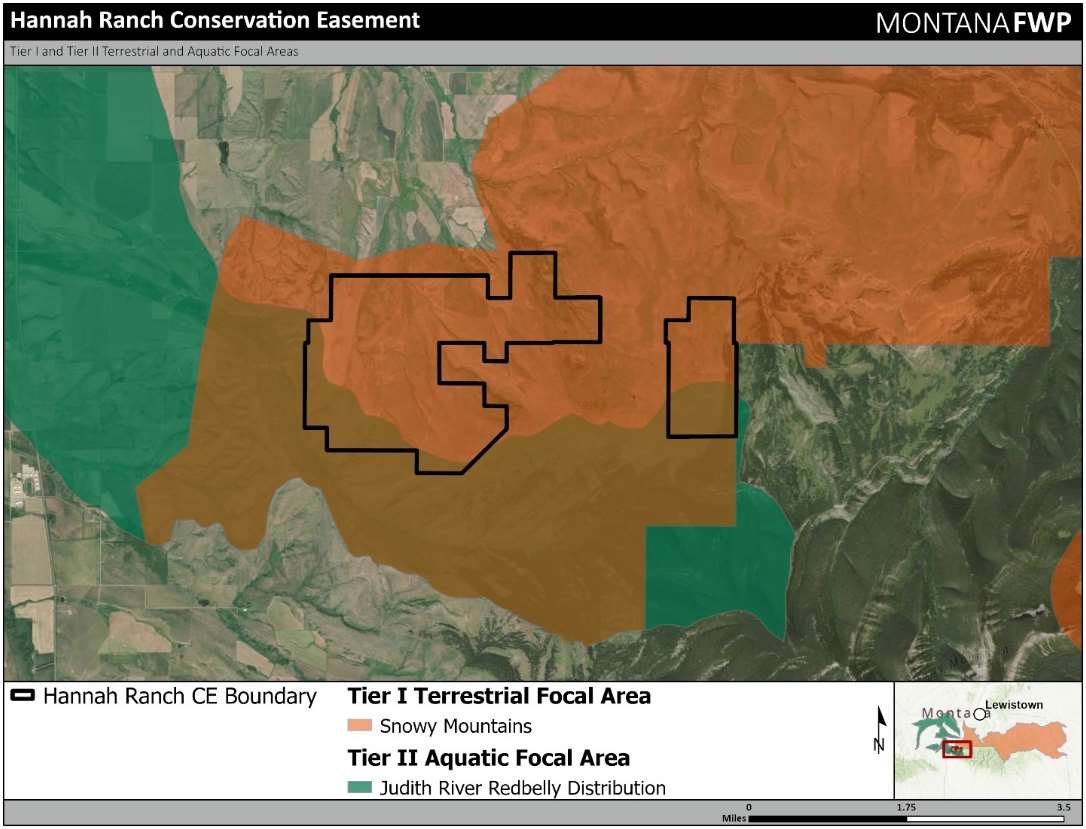
FWP has proposed conserving 3,652 acres of prime elk habitat near the Big Snowy Mountains, along with new public access to surrounding public lands. We support the project and the landowners behind it. However, FWP is pursuing a 99-year lease rather than the perpetual conservation easement preferred by the landowners, Fergus County and the public.
Paying 95% of the cost of a perpetual easement for an agreement that expires would set a precedent that could effectively end perpetual easements and undermine public access in Montana. Speak up before the Commission’s October meeting and ask them to move this forward as a perpetual conservation easement.
Official MWF Comment to the Montana Fish & Wildlife Commission
On behalf of the Montana Wildlife Federation (MWF), who for 90 years has worked to protect Montana’s fish and wildlife, public lands, clean waters, and fair-chase hunting and fishing heritage, please accept these comments regarding the proposed 99-year Habitat Lease for the Hannah Ranch.
We are incredibly supportive of the project and deeply appreciative of the landowners, but we have serious concerns with the terms.
The proposal would conserve 3,652 acres of some of the best elk habitat in the state for a long, long time. Add to that the granted and perpetual walk-thru access to public lands, essentially creating a new trailhead to the NW corner of the Big Snowy Mountains, and this project is a win for the landscape, public access, hunting opportunity, and the working, production agriculture family who calls this ranch home. There’s no question about that.
However, the 99-year term is incredibly problematic and would set a harmful precedent. The responses from FWP in the Decision Notice did little to satisfy these concerns, and in some ways made them worse.
First and most concerning, this isn’t what the landowners want. Since 2021, the Gilberts have been clear that they prefer a perpetual easement, something FWP acknowledges themselves in page 17 of the Decision Notice. Forcing this as a 99-year agreement is not only disrespectful and harmful to small-scale agriculture, conservation efforts, and other public access opportunities in Montana, it’s a clear violation of and threat to private property rights.
The public and locals prefer a perpetual agreement as well. At the July 21 information meeting in Lewistown, local stakeholders voiced overwhelming preference for a perpetual conservation easement, and expressed concerns over the false choice of the 99-year agreement or nothing.
Additionally, this project was already scoped as a perpetual agreement, something FWP acknowledges on page 12 of the Decision Notice. During that time, an April 14, 2025 letter of support for the perpetual proposal was received from the Fergus County Commissioners.
Most recently, of the 119 comments submitted during the Environmental Analysis, 86 expressed a strong and clear preference for this to be a perpetual conservation easement (72%). This compared to just 18% who supported the project as a 99-year agreement, 6% who opposed entirely, or 4% of comments that were neutral. It’s also likely that the 18% who supported the project as a 99-year agreement would also support it as perpetual.
FWP claims there is ‘some opposition’ to the perpetual conservation easements, and they’re not wrong—but it’s important to put this ‘some’ in context by showing the vast majority who support this as a perpetual easement, including local stakeholders and the County Commission.
By ignoring other alternatives, i.e., perpetual, FWP is presenting us and the Commission with a false choice.
While FWP repeatedly claims that this 99-year agreement is the only viable option, the explanation is lacking. In the Decision Notice, FWP outlines four alternatives: 1) no action; 2) the proposed action: a 99-year agreement; 3) a 30- or 40-year Habitat Lease, which the landowners don’t want; 4) or to pursue a perpetual CE.
Responding to the 4th option, FWP goes on to explain that “Conservation easements offered by FWP can be perpetual, meaning the protections offered would remain on the land in perpetuity. Due to some opposition to perpetual CEs, FWP determined Alternative 2 was a more viable option. Accordingly, FWP dismissed Alternative 4 and did not carry it forward in this analysis.” That’s it. The entirety of FWP’s position is “due to some opposition to perpetual CEs.” This is wholly unacceptable.
Perpetual CEs are legal options; there’s funding available; it’s what the landowners prefer, and it’s a landowner’s right. This is not FWP’s call.
For FWP to not carry forward an alternative simply because there is ”‘some opposition to perpetual CEs,” FWP is boldly disrespecting and abusing their agency discretion, directive and authority. At the very least, the Commission should be given the option to move this 4th Alternative forward, and approve a perpetual CE.
The next line of approval after FWP and the Commission is the Land Board. MWF understands and is sympathetic to the political concerns with one or two members of the Land Board and their personally held ideologies against long-term conservation efforts. However, these ideologies are not representative of Montanans, and this issue should not be Montana FWP’s – or the Commission’s – sword to fall on.
A loud, vocal minority opposing conservation is nothing new. A few lawmakers in Helena have repeatedly pushed these same unpopular attacks on private property rights – attacking perpetual easements in favor of short-term habitat leases. Yet, tellingly, these efforts have been routinely and roundly defeated.
Take Senate Bill 209 from State Senator Tony Tezak (R-Ennis) in 2025 which proposed limiting conservation easements to a term of 40 years max, rather than allowing perpetual agreements. The bill was so unpopular, and the outrage so overwhelming and swift, Sen. Tezak opened his bill’s hearing waving a white flag and saying he was withdrawing the bill but still wanted to allow opponents a chance to express their concerns. After a long line of reasonable and diverse opposition, the bill was then defeated not just with bipartisan opposition, but tabled unanimously.
Yet by FWP forcing this 99-year habitat lease and with a valuation of 95% of the perpetual appraisal, Montana would face the same outcome as Sen. Tezak’s bill – perpetual easements in Montana would effectively end. Because what landowner in the future would elect to sell perpetual development rights when they can collect 95% of that value by offering a 99-year lease instead? Moving forward with this 99-year term and caving to perceived and personal ideologies of the Land Board would set an anti-private-property-rights precedent.
In the Decision Notice: “FWP also recognized that a 99-year term CE is a new model but reiterated that FWP remains committed to pursuing perpetual CEs in the future.” How is the public supposed to believe this when there’s no reason now to not pursue the perpetual CE easement other than “some opposition”? If ‘some opposition’ is all it takes to shelf the idea now, FWP certainly isn’t showing a commitment to pursuing perpetual CEs now or in the future.
For FWP to make a decision based on an assumption that this won’t be approved by the Land Board as a perpetual easement is presumptuous, inappropriate and offensive to the Montanans who elected the 5-member Land Board to represent us.
Finally, while there’s money available with the Habitat Montana account sitting at more than $30 million, and MWF would be delighted to see this money spent, this isn’t a responsible use of sportsmen’s funds. The proposed purchase price of the 99-year agreement is 95% of the appraised value of a perpetual easement. So for a 5% ‘savings,’ the proposed alternative is electing to conserve lands and offer public access for 99 years versus forever.
But don’t take our word for it.
Here’s what FWP had to say in the Decision Notice about the valuation and comparison between perpetual and 99-years: “FWP agrees that a perpetual CE would provide a more long- term public benefit,” and “FWP acknowledges concerns regarding valuation of a 99-year CE relative to a perpetual CE, and the uncertainty of future costs to renew or otherwise protect the Hannah Ranch’s Conservation Values after the term expires. FWP does not claim that a term CE is a better value than a perpetual CE.”
Conclusion
MWF supports the project and we applaud the landowners for their efforts to conserve their property and keep their working lands in family hands. But we object to the 99-year term and ask that this be moved forward as a perpetual conservation easement instead.
We look forward to advocating for a full, perpetual easement in front of the Land Board, and holding those five elected officials accountable for votes on something the local County Commission supports, the landowners want, and Montanans – especially the sportsmen who are footing the bill for this – prefer.
Thank you for your careful consideration,
Montana Wildlife Federation
