Quick Response Needed to Control CWD

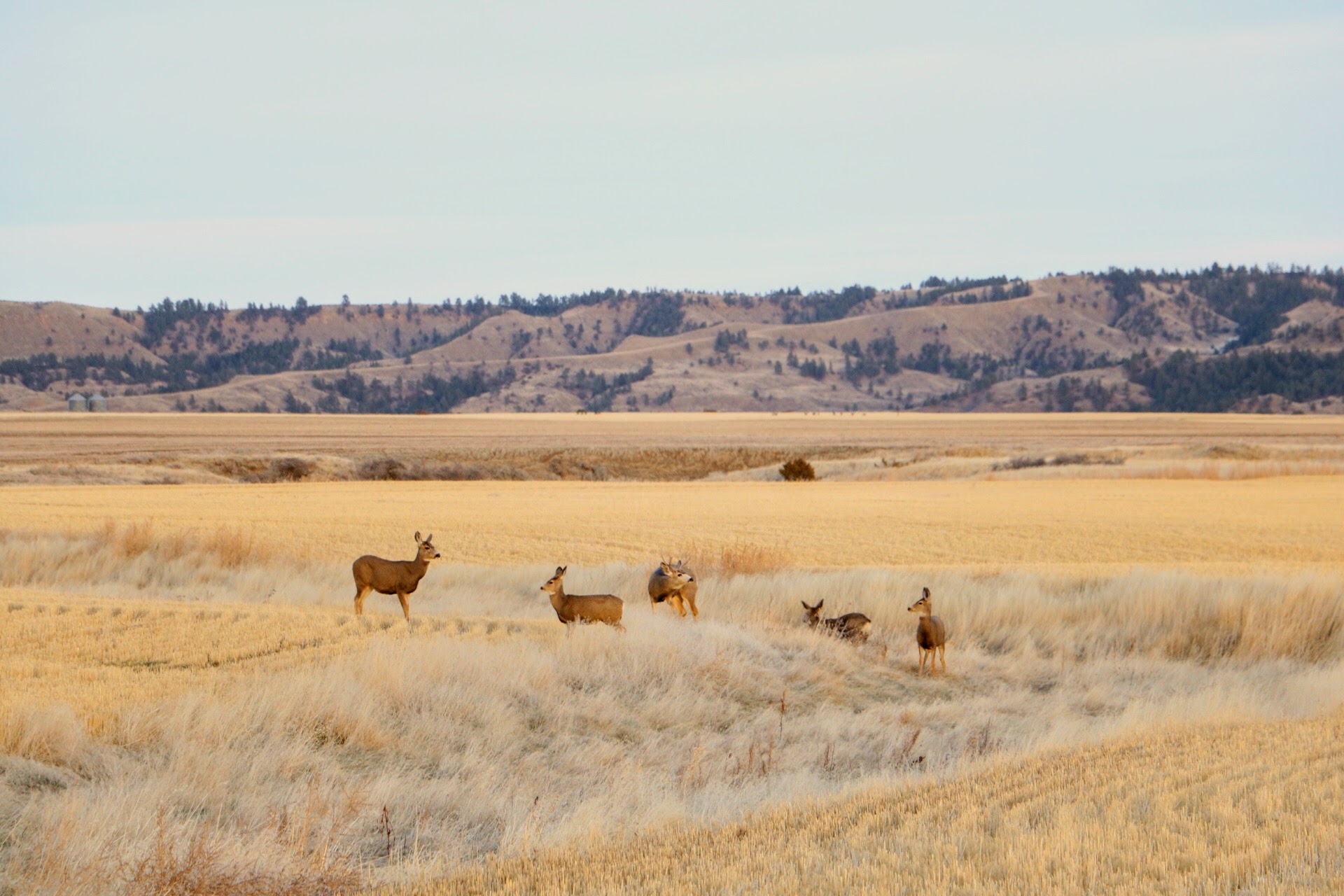
Mule Deer on Montana Ranch CC by Scott Akerman
Mule deer by Scott Akerman.

Chronic Wasting Disease (CWD) is a deadly neurological illness that is fatal to deer, elk and moose — and now it is in Montana.  In the last month, the disease has been confirmed in two wild deer shot by hunters near Billings.

The spread of CWD poses a serious threat to Montana’s big game herds, hunting heritage, and outdoor economy.  Wildlife managers, hunters, and agricultural landowers must take aggressive steps to limit the spread of CWD in both geographic distribution and prevalence within herds.

The arrival of CWD in Montana comes just as the Department of Fish, Wildlife and Parks was in the  process of revising their CWD Management Plan.  The plan calls for more monitoring to catch CWD occurrences, special hunts to determine prevalence within a deer herd, and stepped up public outreach to educate people about the threat.

MWF has weighed in with comments on the FWP’s plan with a call for quick, aggressive action to control CWD.  MWF supports more resources for eradication as a primary strategy for containing the disease, including the use of aggressive special hunts.  MWF also reaffirmed support for a general hunting season that emphasizes opportunity, which can keeps buck-doe ratios low and prevent the spread of the disease.  Finally, MWF reiterated the importance of ending elk feeding in Wyoming, which is a major vector in spreading multiple wildlife diseases.

“Montanans have long feared this day, yet knew it was inevitable,” MWF wrote.  “With solid cooperation from Montana’s hunters, as well as landowners and others, we can work to limit its scope in both range and prevalence. We should strive to eradicate CWD in cervids in our state, and must act quickly.”

Click here for MWF’s CWD letter.

Saving the Last Dance

Sage Grouse

Facing a repeal of federal sage-grouse conservation plans, the Montana Wildlife Federation led a coalition of Montana sportsmen groups in penning a letter to Interior Secretary Ryan Zinke and BLM Acting Director Brian Steed to save the sagebrush steppe landscape, an iconic bird, and 350 other species that calls this unique ecosystem home.

The 2015 Federal Sage-Grouse Plans were developed by local stakeholders in Montana and across the West to conserve sagebrush habitat, keep the sage-grouse off of the Endangered Species list, and protect habitat for mule deer and hundreds of other species.  The Trump Administration is presently considering repealing the plans.

The Montana Wildlife Federation was joined by the Theodore Roosevelt Conservation Partnership, Montana Backcountry Hunters & Anglers, Montana Trout Unlimited, Anaconda Sportsman’s Club, Laurel Rod & Gun, Hellgate Hunters & Anglers, Montana Bowhunter’s Association, Helena Hunters & Anglers, Gallatin Wildlife Association, and the Mule Deer Foundation.  The groups, representing tens of thousands of Montana hunters demanded that the 2015 Federal Sage-Grouse Plans be kept intact, fully implemented, and given the necessary time to work.

Click the link below to read the full letter

Sage Grouse Letter

Unacceptable

(Photo courtesy of the BLM)

President Trump will announce Monday his decision on shrinking Bears Ears National Monument. We cannot accept the shrinking of any national monument, as this will set a dangerous precedent, and could put into motion a waterfall of regrettable events that could eliminate access to stunningly beautiful and historic public lands. There has never been a president that has reduced the size of a national monument under the Antiquities Act, and this would be a violation of the Antiquities Act, a slap in the face of the native tribes involved in the fight for Bears Ears, as well as an irreversible disintegration of our shared values of public land access. Bears Ears – 1,351,849 acres controlled by BLM, and USFS – our land, preserved for as a legacy to share with future generations. Once it’s gone, it’s gone. If you have not laid your eyes upon this land, do nothing else until you view several photos and read about what is sacred there. There are 35,000 documented sacred native historical dwelling and spiritual sites, and possibly as much as 100,000 undocumented wonders. Five local Native American tribes are working together to protect this land for all of us to cherish and understand.… Pueblo, Navajo, Hopi, Ute, and Ouray tribes. It would be a travesty to shrink any portion of Bears Ears and lose any more historical artifacts and ancient ruins which define the very purpose of our country – to share land that is not just about one individual or company’s prosperity, but to preserve our past so we can celebrate our future. There is evidence of 10,000 years of Native American residence – longer than any current American community or neighborhood, and up to 3000 years of settlement communities. Bears Ears is also connected to other important sites such as Mesa Verde, Escalante, Canyon Lands, and Arches, where millions of visitors flock each year and support the parks, the land, and the local economies – families like yours and mine.  

(Photo by John Fowler-Flick)

What an incredible loss it would be if these lands were disparaged for the short-term financial gain of one or two corporate entities, profiting from actions facilitated by a government that is more interested in the progress of a few than the preservation of lands for many to explore and enjoy now and in the future. The American people cannot allow this to happen as we are unique in the world for our values to protect shared public lands for each other’s benefit. There are areas in Montana, such as Missouri Breaks National Monument, which was considered for downsizing, yet another example of the unacceptable encroachment of our rights to explore and appreciate the wondrous landscape and culture of our country in exchange for short-term gain. Please stand up for your American heritage and fight this encroachment on your rights as a public landowner. 

John Salazar is a Montanan, father, hunter, conservationist, and resident of Livingston. This piece by John originally ran in the Livingston Enterprise and Billings Gazette.

Mule Deer on the Monument

IMG_6240
(Photo by Marcus Strange)

Bowhunting bugling bulls in September is by far my favorite thing to do. One B on that list is glassing up mule deer bucks, on public land, in the rut. Instead of hunting closer to home this year, I took the show on the road and hunted mule deer in the Upper Missouri River Breaks National Monument. It was a not only a great opportunity to spend time with one of my favorite species, but experience one of the most incredible pieces of public land our country has to offer. The Breaks monument is aptly named. The hallmark of this landscape is sharp, rapidly descending coulees and canyons, all moving towards a river bottom that must be experienced to be believed.

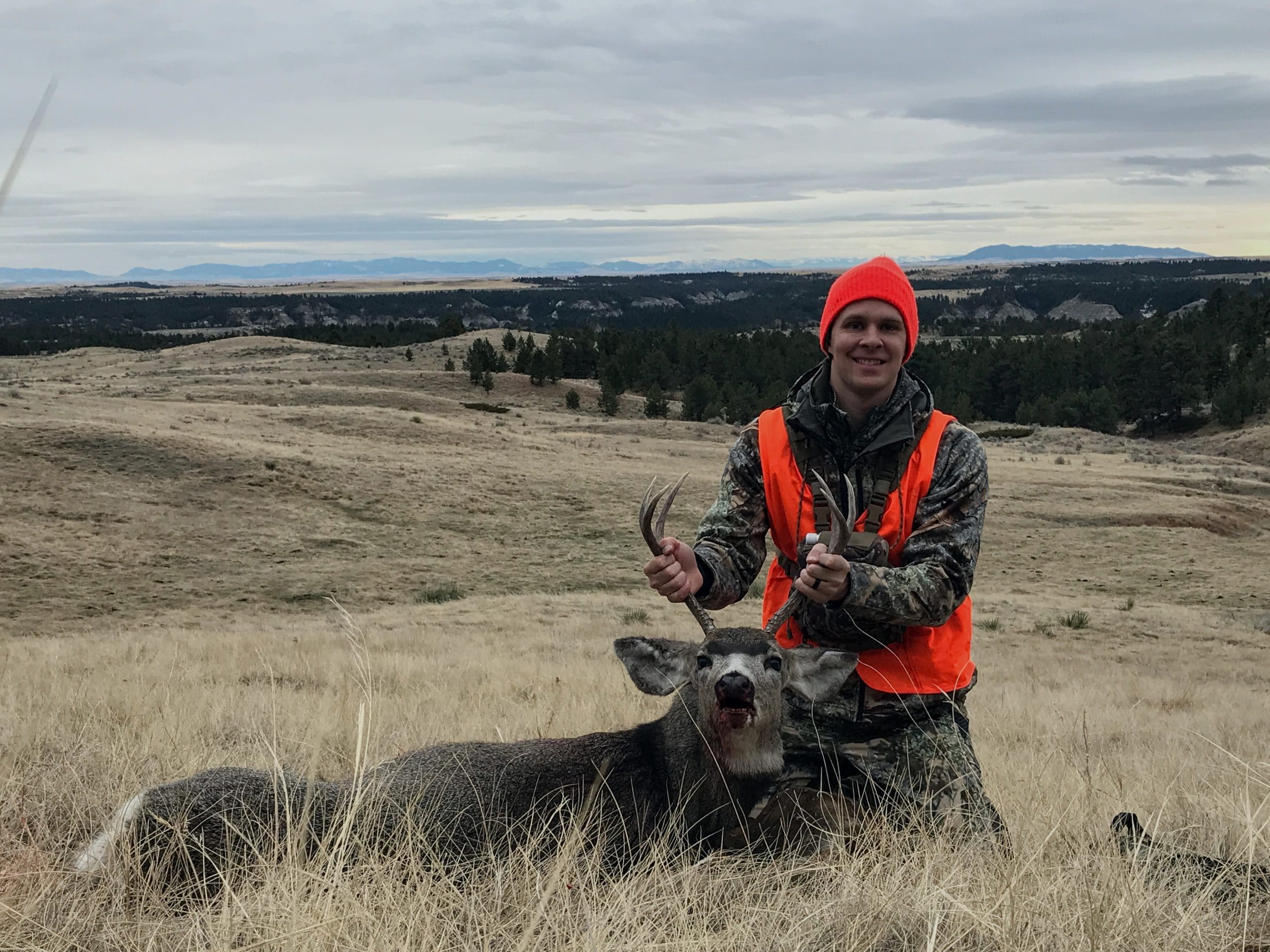
I spotted a solid looking three-point buck around noon with a group of does a half mile away, again at1pm at 60 yards, and again at2pm at 300 yards. Unfortunately, he was on parcels of private land that were not huntable (this is a challenge when hunting the fringes of the Breaks). I gave up on him and set up to glass one of the many other canyons.

(Photo by Marcus Strange)

After glassing one vantage point, I started to work my way along the rim of the canyon when I saw something that made my heart drop and leap at the same time. It was the tips the buck’s antlers moving through the grass. Defying all logic, this buck had left food, water, does, and was walking right towards me.  Shaking off the shock that threatened to overwhelm me, I took up a vantage point on the rim of the canyon and waited.

It seemed as if I sat there for an eternity, surrounded by an eerie silence. The clatter of a rock being dislodge pierced the silence and I quickly pivoted my rifle on its rest towards the sound. The buck, cautious, sniffed the air and froze, his eye’s locked on my position. In a heartbeat I ran my shot list; pick a spot, watch it to keep it, breath in, breath out, relax, squeeze.

IMG_7097
(Photo by Marcus Strange)

I heard the shot, felt the recoil, and watched with relief as the buck stopped in his final resting place. Joy and sorrow always fill me with each animal I take. Sorrow as the loss of life, joy at filling a freezer and accomplishing a goal. As I dressed out my deer, a snowstorm rolled in and I hiked out in the dark and driving snow.

While each hunt is unique, the ability for anyone to go and have their own experience is not unique. It is a privilege offered to each American, thanks to the Antiquities Act and other public lands protections. Click HERE to learn about how you can help protect your public land heritage.


Crucial Companions: The Herds and the Bird

When snow blankets vegetation in the foothills and mountains, big game animals like mule deer, elk and pronghorn depend on sagebrush lands, the same habitat that sustains greater sage-grouse. Wildlife biologists point out that healthy habitat is key for healthy wildlife populations. For sportsmen and women who roam sagebrush country each fall, the connection between sage-grouse and other wildlife is clear. They know what’s good for the bird is good for the herd. That’s why they want to conserve sage-grouse and their habitat.

Montana-Sage-Grouse-Map

Sage-grouse used to number in the tens of millions across the West, but now number an estimated 200,000 to a half-million. Sage-grouse are seen as a bellwether species for the health of sagebrush lands. And sage-grouse conservation plans developed by the states, Bureau of Land Management and the Forest Service with input from locals on the ground are the way forward for Western big game.


Sage Grouse. Photos by Bob Wick, BLM
Sage Grouse by Bob Wick, BLM

But the fate of all the work and collaboration that went into the plans is uncertain as the Trump administration considers major changes. These plans helped convince the U.S. Fish and Wildlife Service that sage-grouse didn’t need to be added to the endangered species list. Failure to move forward with the conservation efforts could lead to the very outcome the plans were intended to avoid – a listing of the bird and the restrictions that come with it. Governor Bullock and other Western governors have said wholesale changes to the conservation plans aren’t needed and have voiced support for focusing on sage-grouse habitat to rebuild the bird’s population

The Bureau of Land Management is collecting public comment on the sage-grouse conservation plans until December 1st. It is important that they hear from sportsmen and women from around the West. Tell them that they should give the plans a chance to work. Go to: nwf.org/beherdforthebird to take action.


Jeff Lukas – MWF Elk Campaign Manager

Jeff Lukas

Conservation Director

Jeff Lukas is a passionate conservationist who has been fishing and hunting his entire life. Whether it’s floating a small stream chasing trout, pursuing elk in the high country, or waiting in a blind for ducks to set their wings, Jeff is always trying to bring more people afield to show them what we are trying to protect. He loves being in the arena, and he will never shy away from conversations about the beautiful and unique corners of Big Sky country.