Recovering America’s Wildlife Act

Niall Clancy photo  Members of my generation, the millennials, have a unique perspective on many issues.  This includes our views on wildlife conservation. Many of us love to hunt and fish, but we also see the need to conserve the full, complicated ecological web of all fish and wildlife. And while many of us don’t pay much attention to the goings-on in Washington, every once in a blue moon, some major new policy catches our eye. That’s what happened to me recently when I saw the words ‘Congress’ and ‘Wildlife’ in the same headline. After reading up on the Recovering America’s Wildlife Act, I realized this rare bill was something that all outdoors enthusiasts on either end of the political spectrum could agree on.

   Since 1937, hunters and anglers have gladly paid a small excise tax on all their gear for the express purpose of funding state wildlife agencies through the Pittman-Robertson and Dingell-Johnson Sportfish and Wildlife Restoration Acts. In fact, up to 75% of agencies’ total budgets, are generated by taxes on hunting and angling equipment. As most MWF members know well, the funds provided through Pittman-Robertson and Dingell-Johnson have been crucial to the recovery and management of Montana’s wildlife, ensuring that we have plenty of hunting and fishing opportunity.  With enough funds to adequately monitor game species such as deer, elk, or black bears, Montana Fish, Wildlife and Parks can set appropriate harvest quotas so that game populations keep producing enough animals for a yearly hunt. On the fishing side, Dingell-Johnson funds have supported Montana’s best-in-the-nation wild fisheries. The same wildlife conservation success story is true across the country.

  However, hundreds of non-game species – species that are part of the ecological web on which elk, deer, cougars, and trout rely, lack adequate conservation funding from Pittman-Robertson and Dingell-Johnson.  As a result, they are much more likely to be in decline, and eventually listed under the federal Endangered Species Act.

   The Recovering America’s Wildlife Act (H.R. 4647) is a critically important solution to this funding gap. This bill would take existing funds generated from energy leases on federal lands and waters and send them to the states for management of species in need of conservation attention. These funds are badly needed to prevent non-game species from further population declines, and also protect game species and maintain state control of wildlife.  

While the Pittman-Robertson Act has served the outdoors community well through its 80-year tenure, it is badly in need of more support. The Recovering America’s Wildlife Act is an outdoors bill for the millennial age.  It would put our at-risk wildlife on track to recovery, and ultimately improve hunting and angling opportunity for generations to come. Unlike many of the polarizing issues that our political system argues about, this bill unites people from every end of the political spectrum.  Introduced last December, the bill already has nearly 40 cosponsors, both Republicans and Democrats. I encourage my fellow millennials, as well as hunters, anglers, and other conservationists of all generations, to join me in calling on our congressional delegation to support this bill.

by Niall Clancy, MWF Member

Originally from Hamilton, Niall Clancy is currently studying fisheries management at Utah State University.  Reach him at niallgc66@gmail.com.
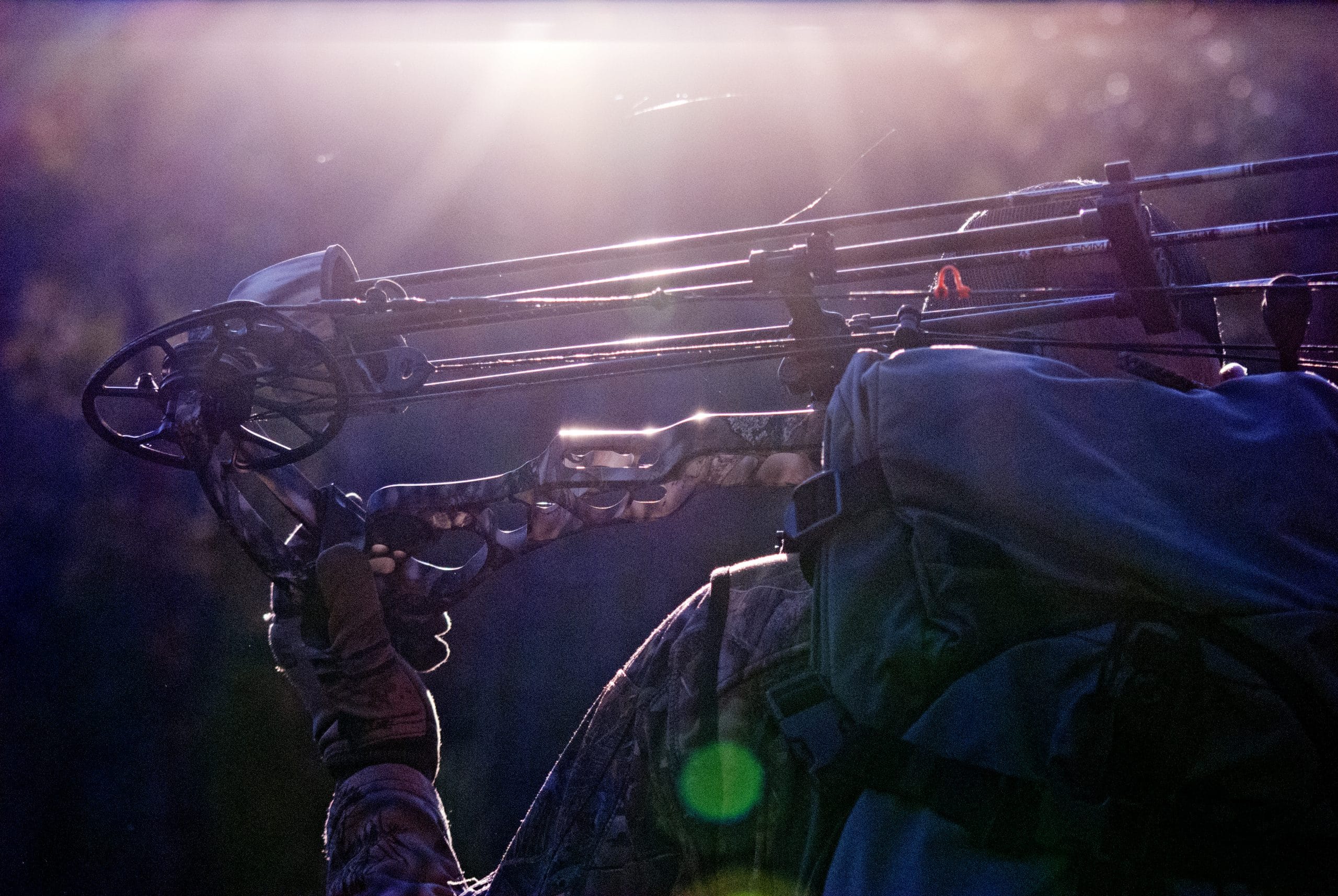
Hunting Isn’t Just About Killing or Meat In the Freezer.

  TurkeyHunt 4

Hunting isn’t just about killing or meat in the freezer. It is a complexity of elements that are a part of us as much as breathing is.

_______________________________________________________________________

TurkeyHunt 13

As the gray light of the morning trades places with the dark, I close my eyes and let my auditory senses heighten. It’s amazing what one can hear when all the distractions of modernity get left behind. I let out a few yips and a mournful howl doing my best impersonation of a coyote. Against all common sense, a gobble thunders through the holler.

The gobble ripples over the hills and disappears into the gray dawn as quickly as it came. There’s a mad scramble as gear is throw in packs and we make last-minute adjustments before striking out into the woods.

TurkeyHunt 5

This wild landscape is not here by accident, nor can we expect it to stay by accident.

For many of us who wander through the woods, we find ourselves pondering on the complexity of nature, the innate beauty of the lands and of the wildlife, or the meaning of life itself. Our surroundings and experiences may cause us to contemplate and wrestle with a range of emotions as the impressiveness of public lands wash over us.

We take public lands for granted.

We hike, hunt, harvest, bike, boat, create, watch, wander, live, and grow on this land we call our own without a thought for how it came to be and what we, the owner must do to keep it.

In 2018, the Helena-Lewis and Clark National Forest (HLCNF) will undergo a revision of its forest management plan. The plan will determine the future management of the Rocky Mountain Front and the Big Belt, Little Belt, and Snowy Ranges.

TurkeyHunting 8

These public lands provide numerous recreation opportunities and are home to numerous species of flora and fauna. Iconic rivers flow through the HLCNF. The HLCNF is truly one of the great treasures of the West.

One priority for Montana hunters and anglers in the plan revision is the protection of large, unfragmented blocks of public land that provide security habitat for wintering elk and deer. These areas are especially important in light of recent efforts by Senator Steve Daines and Representative Greg Gianforte to strip protections from Montana’s Wilderness Study Areas, in particular, the Big Snowies and Middle Fork of the Judith in the HLCNF.

TurkeyHunt 8

To remove protections for these landscapes would threaten vital security habitat. Now, more than ever, Montanans need to stand up for their public lands and wildlife and protect the HLCNF for future generations have quality and diverse public lands.

Marcus Strange, Montana Wildlife Federation, Central Field Rep. 

Thousands of Species Face Extinction: But It’s Not Too Late to Act


Long billed curlew.512x275.RobertBurton.FWS As many as one-third of America’s wildlife species are at increased risk of extinction, according to a new report by the
National Wildlife Federation (NWF), the American Fisheries Society (AFS), and the Wildlife Society (TWS).  NWF is America’s largest grassroots wildlife conservation organization, AFS is the professional association of fisheries scientists, and TWS represents thousands of wildlife scientists, managers, and educators.

“America’s wildlife are in crisis and now is the time for unprecedented on-the-ground collaboration,” said Collin O’Mara, president, and CEO of the National Wildlife Federation. “Fish, birds, mammals, reptiles, and invertebrates are all losing ground. We owe it to our children and grandchildren to prevent these species from vanishing from the earth.”

Among the findings in Reversing America’s Wildlife Crisis: Securing the Future of Our Fish and Wildlife:

  • One-third of America’s wildlife species are at increased risk of extinction.
  • More than 150 U.S. species already have gone extinct.
  • Nearly 500 additional species have not been seen in recent decades and are regarded as possibly extinct.

But the news isn’t all bad. The report also describes how it is possible to prevent the further decline of America’s wildlife through concerted, collaborative efforts.

“Here in Montana, we know that we can prevent wildlife from becoming endangered by working together to protect and restore habitat,” said Dave Chadwick, executive director of the Montana Wildlife Federation.

Montana has numerous examples of successful species restoration efforts.  In 2014, the Arctic Grayling in the Big Hole River was kept off the federal endangered species list thanks to collaborative efforts by conservationists and ranchers in the Big Hole Valley.  The conservation efforts around the greater sage-grouse represent another success story in progress. In some cases, species have even been saved through interventions as simple as survey efforts that document their population status.

“Stopping the wildlife extinction crisis isn’t hard, it just requires a willingness to work together and put resources into conservation. Over the long run, preventing wildlife from declining will save money and help avoid political fights. Common ground is common sense.” said Chadwick.

Legislation currently pending in Congress would dramatically increase funding for preventing conservation efforts.  The Recovering America’s Wildlife Act (H.R. 4647) would increase funding for the Department of Fish, Wildlife and Parks’ conservation efforts, providing about $29 million/year in new federal funds for the agency.  H.R. 4647 currently has 38 cosponsors, including Democrats and Republicans from all over the country. Rep. Greg Gianforte is not yet a cosponsor of the bill.


Commission to set hunting seasons in busy meeting

Elk_shutterstock_457334638 The Montana Fish and Wildlife Commission will set the seasons for hunting for the next two years in a jam-packed agenda that includes a major conservation easement and several fisheries issues.

The Commission on Thursday will finalize the 2018-2019 hunting seasons for most big game species. This includes deer, elk, antelope, moose, bighorn sheep, mountain goats, black bear, mountain lions, wolves and more. The proposals lay out what animals can be legally killed in each district, quota ranges by district, and season dates.

In addition, the Commission will consider adopting an annual review of the elk shoulder seasons, which are rifle seasons that are printed in the hunting regulations that run outside of the general season and can run from Aug. 15 to Feb. 15. Commissioners will also adjust several hunting district boundary adjustments, set quotas for game damage and special Chronic Wasting Disease hunts.

The Horse Creek Complex Conservation Easement is also before the Commission for final approval. This project near Wibaux would protect more than 15,000 acres from development, and open up more than 18,000 acres of habitat – and public hunting opportunity – for mule deer, sage-grouse, antelope, upland birds and waterfowl.  This project is another great example of the work that Habitat Montana does for Montana’s wildlife and hunters.

The Commission will also act on a recommendation to hold off on a grizzly bear hunt this year.  They will consider a letter reaffirming their support the Recovering America’s Wildlife Act, a bill currently before Congress that would provide $1.3 billion nationwide to state wildlife agencies, including $29 billion to Montana FWP, to help conserve at-risk wildlife and preempt listings under the Endangered Species Act.

As at every Commission meeting, Montana Wildlife Federation staff will attend the meeting to track the discussion and comment on key issues. MWF volunteers will also be on hand at regional offices to offer public comments.

The meeting begins at 8:30 a.m. Thursday, Feb. 15 at the Montana WILD center, 2668 Broadwater Ave. in Helena. The public can also go to any of the seven Montana FWP Regional headquarters to make comments.

The public can also listen in by going to www.fwp.mt.gov.

EQC to Meet in Helena

Montana Capitol
Montana Capitol. Photo credit: Mark Dostal

The Montana Wildlife Federation will be watching out for the interests of hunters, anglers and wildlife enthusiasts when the state Environmental Quality Council (EQC) holds its quarterly meeting this week in Helena.

EQC is the legislative interim committee that oversees the departments of Fish, Wildlife and Parks (FWP); Natural Resources and Conservation (DNRC); and Environmental Quality (DEQ).  It conducts studies between legislative sessions and can recommend legislation to address specific issues.  What happens at these meetings can have a big impact on the agenda during the 2019 Legislative Session, and MWF staff will be attending and monitoring the issues for the entire meeting.

The agenda for this week’s two-day meeting includes an update on the evaluation of the state parks program by FWP.  State parks have been under scrutiny since last session, and several bills would have changed the oversight of state parks, including one that would have moved the program out of FWP.

EQC will also receive an update from FWP of Chronic Wasting Disease CWD), which was first detected in deer last year; and will review options for bills to address large dog training operations in upland game bird areas. Sage grouse conservation is also on the agenda as Montana continues to move forward with a plan to conserve the native upland game bird.

On the second day, EQC will hear from FWP on the review of its funding, including a review of hunting and fishing license fees. That is required every four years based on a bill passed in the 2015 Legislature that revamped and simplified Montana’s license fee structure.

The program to prevent aquatic invasive species is also on the agenda, as well as a report on the options for managing brucellosis in elk. The meeting finishes out with a review of potential management changes by FWP for grizzly bears.

The council, which includes appointed citizen members, will meet this week in room 172 of the Capitol. The meeting begins 9:30 a.m. Wednesday, Jan. 17 and 8 a.m. Thursday, Jan. 18. You can see the agenda for more information on specific topics.

Jeff Lukas – MWF Elk Campaign Manager

Jeff Lukas

Conservation Director

Jeff Lukas is a passionate conservationist who has been fishing and hunting his entire life. Whether it’s floating a small stream chasing trout, pursuing elk in the high country, or waiting in a blind for ducks to set their wings, Jeff is always trying to bring more people afield to show them what we are trying to protect. He loves being in the arena, and he will never shy away from conversations about the beautiful and unique corners of Big Sky country.