Muddying Montana’s Waters

Scenic 2 - Matt Rogers

Rivers, streams, lakes and wetlands play an integral role in the lives of many Montanans. The waters that give us a place to fish, hunt, and float deserve to be protected. Unfortunately, hunters and anglers are seeing that, once again, our streams, lakes, and wetlands are under attack.

An executive order just issued by the Trump Administration would repeal the Clean Water Rule, removing the protections of the Clean Water Act from hundreds of thousands of miles of streams and waterways in Montana and across the nation. In fact, this directive removes protections for 60 percent of the nation’s stream miles and 20 million acres of wetlands.

The Clean Water Rule was developed by the EPA and Corps of Engineers over several years of work, and was intended to clarify legal confusion that existed in the past. The agencies met with over 400 stakeholder groups, including the energy industry, farmers, ranchers, and hunters and anglers. The EPA listened to concerns from the farmers and ranchers and made sure that the rule explicitly excludes artificial irrigation systems, ponds, and ditches, while also reaffirming existing exemptions for normal farming, ranching, and forestry practices.

Under the new executive order, a mining company will no longer need any government permission to dredge the creek upstream from your local trout honey hole. They won’t need permission to build a road through a creek or channel and divert the river to create settling ponds.

Anyone who has spent a day fishing a mountain creek or an early morning in a duck marsh knows how fragile those environments can be. As anglers and hunters, we are careful to respect streambeds and shorelines. Industrial users should also be required to take care of the resource.

In addition to providing quality habitat and hunting and fishing opportunity, small streams and seasonal wetlands provide drinking water for one in three Americans. These areas trap floodwaters, recharge groundwater supplies, and filter out pollution. Approximately 54% of Montana’s population uses public drinking water systems that rely on clean surface water; the rest of Montanans rely on clean groundwater.

John Bradley is MWF’s Eastern Field Representative. You can reach him at jbradley@mtwf.org

Capitol Report: Resolutions Pass Before Transmittal

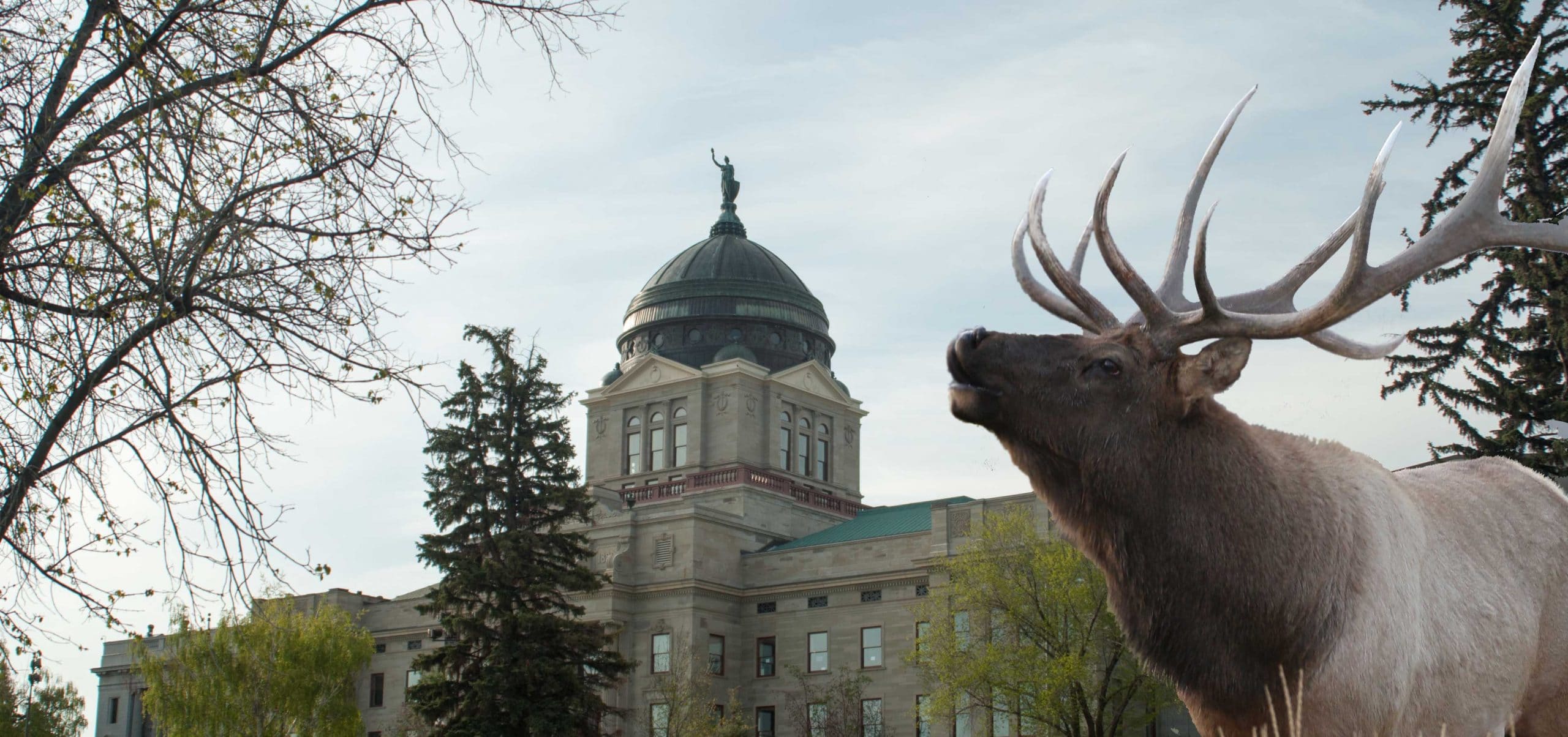
ElkCapitol

Last week was a short one for the Montana Legislature, with only the House in session after the Senate adjourned Feb. 24. The House had very few committee hearings, but the floor sessions contained several wildlife and habitat related measures.

Roadblocked bill

The Montana Wildlife Federation crafted and pushed for HB 295, which would have increased the fine for gating an established county road from the current $10 per day to up to $500 per day. The bill was tabled earlier in the session in the House Judiciary committee in a 10-9 vote. But sponsor Rep. Tom Jacobson worked to blast it Monday onto the House floor, which would have triggered a debate the next day. The motion failed in a 48-51 vote.

Wilderness Study Area Releases

MWF and our conservation partners also worked to defeat HJ 9, which would have released hundreds of thousands of acres of National Forest lands in Montana for future wilderness designation consideration. More than 70 people attended the hearing to oppose the measure, but it passed out of committee and went to the floor. It passed 56-44 and goes on to the Senate.

Grizzly Delisting

Another resolution calling for Congress to go around the U.S. Fish and Wildlife Service and take grizzly bears throughout Montana off the Endangered Species Act passed last week. HJ 15 passed the House 63-37 in a bipartisan vote. MWF testified against the bill and will continue to oppose it. Although we supported delisting the Greater Yellowstone Ecosystem grizzly population, we believe it should go through the correct process and be limited to that population.

Public Lands Day

On a positive note, the House passed HB 491 to designate March 1 as Public Lands Day in a 52-48 vote. The measure is one that brings Montanans together to honor our public lands and everything they contribute to our state.

Looking ahead

Following the four day transmittal break, MWF will be busy again working on FWP’s budget. We will also have several hearings next week as bills that have passed one chamber move forward in the other chamber of the Legislature.

As always, check the Montana Wildlife Federation bill tracker at montanawildlife.org for the most up-to-date information on bills and where they’re at in the process. For questions, contact MWF Conservation Director Nick Gevock at ngevock@mtwf.org or by calling 458-0227 ext. 108.

Tester Announces Blackfoot Clearwater Stewardship Act

On Wednesday, February 22, more than 100 people gathered at Jack Rich’s Guest Ranch near Seeley Lake where Senator Jon Tester announced the Blackfoot Clearwater Stewardship Act — legislation that would implement the collaborative Blackfoot Clearwater Stewardship Project (BCSP).

The BCSP is a ground-breaking collaborative effort that will protect and enhance hunting, fishing and other recreational opportunities on public land while helping to maintain and create jobs in the forest and recreation industry and support healthy, viable communities.

Hunters, anglers, outfitters, guides, snowmobilers, ranchers, loggers, local businesses, county commissioners and numerous others have joined forces to cut through the contentious divisiveness that hinders public land management today and reach common ground. Senator Tester’s legislation will make that common ground a reality.

Please take time today to call Senator Tester’s office at (202) 224-2644 and thank him for introducing this important legislation. Let him know if you hunt, fish, hike, canoe, cross-country ski, snowmobile or otherwise enjoy the abundance and diversity of wildlife and wild lands in the Blackfoot-Clearwater area — and let him know you appreciate his efforts to protect the places we cherish and strengthen local communities.

It is also important to contact Senator Steve Daines at (202) 224-2651 and urge him to support the Blackfoot Clearwater Stewardship Act.

Special Interest Politics Kills Common-Sense Public Access Bill

Tenderfoot Creek Road

Today the Montana House of Representatives voted to kill a bill that would have strengthened the authority of county governments to remove illegal barriers on county roads that block access to public land for hunting, fishing, and other recreation.

The bill, HB 295, would have authorized county governments to remove illegal gates on established county roads and impose higher fines on people who place such barriers. It would also have allowed counties to issue permits for landowners with legitimate encroachment needs. The bill was sponsored by Tom Jacobson, D-Great Falls.

HB 295 would have addressed the problem of illegal gates on public roads that block access to public land. As documented by the Montana Wildlife Federation in a report last year, these barriers are a real problem for too many Montana hunters, anglers, and outdoorspeople. The bill was developed over several months of negotiations with public hunters, county officials, and other stakeholders to ensure that it would balance public access with private property rights and legitimate maintenance needs.

“Montana lawmakers who really care about public access and private property rights supported this common-sense bill,” said Jacobson. “Thank you to the Montana Wildlife Federation, the Montana Association of Counties, and other stakeholders for your hard work to find common ground on this issue.”

Despite strongly supportive testimony from sportsmen, county governments, and other stakeholders, HB 295 was tabled in the House Judiciary Committee. Today’s vote would have allowed for consideration of the bill by the full House of Representatives.

“HB 295 had no opposition except the anti-access fringe groups who have repeatedly attacked Montana’s stream access and habitat conservation laws. We worked in good faith to increase county authority and local control, helping end conflicts before they become expensive lawsuits,” said MWF Executive Director Dave Chadwick. “It is sad to see some Montana lawmakers cave to special interest politics and oppose common-sense solutions.”

Locked Out: How Illegal Road Closures Keep Montanans From Their Public Lands

Capitol Report: Rush of Bills Before Transmittal Break

ElkCapitol

The Legislature is nearly at the halfway point and that means transmittal, when most bills must have passed one chamber in order to stay alive. That caused a rush of bills to be passed – or die – last week, as committees took up executive action on numerous measures. Here’s the rundown:

Wilderness Releases

The Montana Wildlife Federation and our conservation partners worked to turn out volunteers to opposed HJ 9, a resolution that calls on Congress to release hundreds of thousands of acres of Wilderness Study Areas from consideration for wilderness designation. The hearing drew more than 70 opponents, but the bill passed out on Friday. MWF and our partners will continue to fight this misguided proposal on the House floor.

Public Lands Resolutions

Two good resolutions to put Montana on record against the sale or transfer of federal public lands where heard this week, with one in each chamber (SJ 17 and HJ 11). MWF and our volunteers were there to testify, but both were killed in committee. Attempts to blast them onto the floor of their respective chambers were also defeated.

Public Lands Day

On a positive note, HB 491 to designate March 1 as Public Lands Day to honor our public lands was heard and drew wide support. The bill passed out of the House FWP Committee and is going to the House floor this week.

State Parks Changes

This week was a busy one for the state parks division of FWP. The House FWP Committee passed out HB 324, which would make changes to how the parks are administered, including letting the State Parks Board select the director of the division. In addition, the committee heard HB 454, which would have moved the parks department to the Department of Commerce. Both bills would be bad for FWP and could have jeopardized millions of federal hunting and fishing equipment excise taxes. MWF continues to oppose these bills.

Grizzly Delisting Resolution

MWF testified against HJ 15, a resolution that calls on Congress to delist grizzly bears from the federal Endangered Species List for the entire state. Although MWF supports the delisting of the Greater Yellowstone Ecosystem grizzly population, we do not support a statewide delisting, nor do we support Congress doing an end run around the U.S. Fish and Wildlife Service process to use science to make a decision.

Hunter Pink, Lighted Nocks Go Down

The Senate Fish and Game committee tabled SB 237, which would have allowed blaze pink as an option for meeting the hunting safety requirement. It also tabled SB 225, which would have made legal lighted nocks for archery hunting equipment. MWF opposed the equipment change because lighted nocks were just approved by the Fish and Wildlife Commission, which is where such decisions should be made.

As always, check the Montana Wildlife Federation bill tracker at montanawildlife.org for the most up-to-date information on bills and where they’re at in the process. For questions, contact MWF Conservation Director Nick Gevock at ngevock@mtwf.org or by calling 458-0227 ext. 108.

Jeff Lukas – MWF Elk Campaign Manager

Jeff Lukas

Conservation Director

Jeff Lukas is a passionate conservationist who has been fishing and hunting his entire life. Whether it’s floating a small stream chasing trout, pursuing elk in the high country, or waiting in a blind for ducks to set their wings, Jeff is always trying to bring more people afield to show them what we are trying to protect. He loves being in the arena, and he will never shy away from conversations about the beautiful and unique corners of Big Sky country.