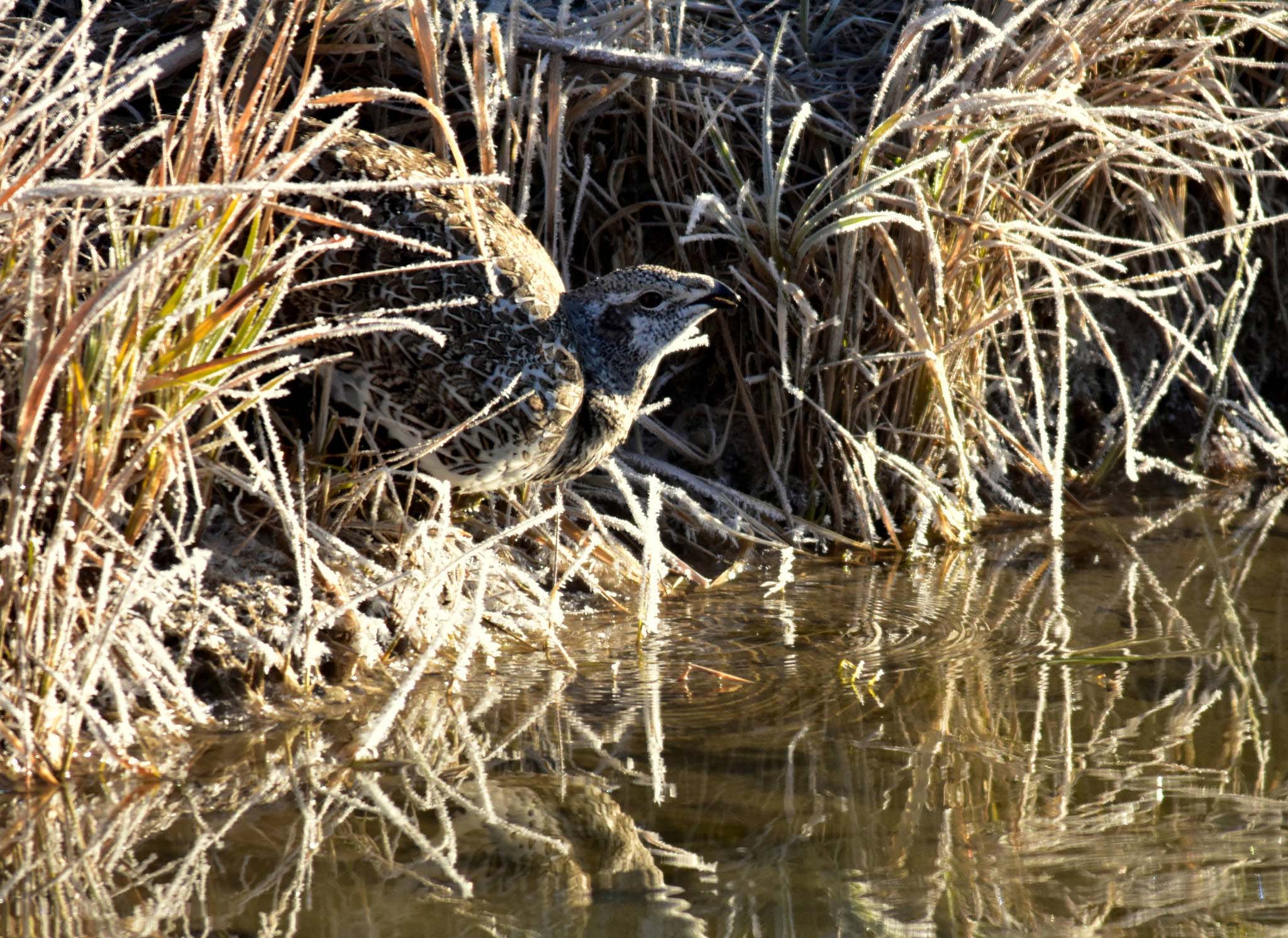
Sage Grouse

IMG 1070 Leading up to the historic announcement in 2015, a diverse group of stakeholders including conservationists, ranchers, outdoor recreation leaders, and members of the oil and gas industry sat down at the table and made tough compromises in one of the largest landscape-level conservation efforts ever. These efforts culminated in the sage-grouse conservation plans that led the Fish and Wildlife Service to decide that a listing under the Endangered Species Act (ESA) was not warranted. Over the past year, Interior Secretary Zinke has pushed for radical changes to those plans, which opens up the threat of an ESA listing. Montana stakeholders have made it clear that changing the plans are unnecessary, and would devastate the sage-grouse and the 350 other species that rely on the sagebrush steppe habitat.

With the Interior Department actively rolling back the plans, Governor Bullock and the state of Montana have stepped up to implement the conservation strategy to preclude the need for federal Endangered Species Act protections. By taking an “all hands” approach, Montana has enlisted industry, private landowners, federal land management agencies, land trust organizations, hunters, and conservationists to work collaboratively to balance development with conservation through the mitigation hierarchy, creating incentives for private land stewardship. This ensures the best outcomes for all Montanans.

Governor Bullock has been a champion for protecting the plans because they play a critical role in protecting Montanan’s way of life and help support landscapes that generate more than $1 billion in economic output annually. Bullock’s leadership has been incredibly important against Zinke’s attacks on the plans.

The strategy used to conserve the greater sage grouse is one of the largest and latest in a long line of ESA success stories. But Secretary Zinke continues to actively attack these plans. Later this fall, a final Environmental Impact Study will be published on Zinke’s proposal to dismantle the sage grouse plans. If Sec. Zinke follows through on his dangerous proposal, he will be blatantly ignoring the years of work and the input of hundreds of thousands of stakeholders who have made it clear throughout several public comment periods that they want the plans to stay in place so they can continue working. Now is the time for Governor Bullock, Western leaders, and sportsmen to redouble their calls to keep the 2015 plans. We need our leaders to stand against the actions that weaken the plans that play a critical role in keeping the sage grouse off the Endangered Species List.


Community Wildlife Habitat Initiative

liz bio photo Liz has found inspiration and solace in nature since her childhood in Virginia, where her family often hiked in the Shenandoah National Park. Since then, her twin passions of athletic activities and the outdoors have earned her a bachelor’s degree in athletic training from Ithaca College. Besides shaping her academic pursuits, Liz’s love of nature has driven her to seek out adventure — hiking to the summit of Mt. Whitney, skiing in the shadow of the Matterhorn, biking through the gorges of the Allegheny Mountains from Washington, D.C. to Pittsburgh, adventure racing internationally in Belize and Portugal. Her yearly visits with her parents to Lake Tahoe to ski and hike sparked a growing interest in environmental education as she learned of the intense and effective community involvement there to protect the lake and its environs. As a result, she is in the home stretch of obtaining a Master’s Degree in Resilient and Sustainable Communities from Green Mountain College and has also completed an 11-month AmeriCorps term as an education and outreach assistant with the Tahoe Environmental Research Center (TERC) in Incline Village, NV.

She returns to Billings to serve a six-month AmeriCorps term through the Montana Wildlife Federation. She is confident that her degree and the field experience she gained with TERC will enable her to help foster within Billings a love of the environment through community outreach. Beyond that, she hopes to inspire people to embrace healthier, more sustainable lifestyles through seemingly small changes in their daily actions to help preserve and protect our precious environment – for themselves and for future generations.

During her term of service with the Montana Wildlife Federation, Liz will be leading the Community Wildlife Habitat initiative. Under the Certified Wildlife Habitat programs, homeowners, businesses, schools, and other properties can receive recognition for landscaping practices that provide quality habitat for desirable wildlife, such as native birds, amphibians, and pollinators like bees and butterflies. These practices include reducing the use of chemical pesticides and fertilizers, conserving water, planting native plants, removing invasive weeds, and composting. The program enhances and restores wildlife corridors in urban and suburban areas, improves resistance to drought and other climate changes, conserves water, and makes the environment healthier for people — outcomes that benefit people and wildlife. So far, 26 homes, one school, and four common areas in Billings are already certified under the Certified Wildlife Habitat program.

The goal of the new initiative is to build upon those numbers and eventually to have the entire community certified. When that occurs, Billings will join Missoula, which was certified as Community Wildlife Habitat in 2017, and 95 other cities, towns, counties and neighborhoods across the nation. A city-wide certification is achievable through the eagerness of the residents to get their individual properties certified to create a healthier, greener, and more wildlife-friendly place to call home. By pursuing this status, Billings is sending a clear message about how much the community values wildlife, wild places.

Montana’s Wilderness Study Areas are Essential to Having High Quality Hunting, Fishing, and Recreational Experiences

Elk

I know that I’m not alone when I say that the wilderness hunting experience represents the apex of what I want from the outdoors. Many hunters like me look for pristine environments untouched by roads, clearcuts, and the hum of towns and highways, areas preferably brimming with elk and deer unconditioned to hunters. Finding this experience requires more bootleather and sweat than most people are willing to give, for a chance at success that rates somewhere around the acceptance rate of an Ivy League university.  The isolation and remoteness that characterizes wilderness areas and wilderness study areas (WSAs) is also a bedrock condition for healthy big game populations both within and outside the wilderness boundary.

I’ve learned that bucks and bulls alike take refuge in steep and deep sanctuaries where the threat of predation or human interference is minimal. I shot a bull on the very edge of one of these havens during the first week of archery season this year, and I’m convinced that this experience and this beautiful animal were both dependent upon the immaculate and rugged habitat of the wilderness study area I found them in. The Thursday after opening day, I hiked four miles through BLM land littered with cattle and roads without seeing so much as a disappearing flash of tan. The very moment I crossed into view of one of the WSAs near Missoula, I spotted a mature bull feeding along a ridgeline. Half an hour later, he charged a cow call and gave me a frontal shot at barely three yards. Within ten seconds, I watched him crash just below me. I still have residual adrenaline from this encounter, and I am sure that this memory will stay with me long after I stop chasing elk.

This was not a remote backcountry wilderness experience: it was a public lands hunting saga that many of my peers would recognize. I hiked in on roads that are open to motorized access for most of the year, but I found elk the moment that I crossed the boundary of the WSA.  This WSA is one of the areas being targeted in legislation offered by Senator Steve Daines and Congressman Greg Gianforte, who want to open it and nearly 800,000 acres of other public lands to development, motorized access, and resource extraction. Their legislation would deprive us, as hunters, the experience of pursuing confident and unpressured elk on public lands. Please stand with me in opposing H.R. 5148 and 5149 and S. 2206.

Sign a letter and tell Senator Daines and Representative Gianforte that Montana’s hunters and anglers value Wilderness Study Areas.

By Walker Conyngham, a lifelong hunter and the Policy and Outreach Assistant for Montana Wildlife Federation.


Land Conservation Funding Moves Forward in the Senate

Mike fishing 2

Following the expiration of the Land and Water Conservation Fund (LWCF) over the weekend, the Senate Energy & Natural Resources Committee today voted to approve the Land and Water Conservation Authorization and Funding Act (S. 569).

Senator Steve Daines, as a member of the Energy & Natural Resources Committee, voted for the bill, which he has cosponsored along with Senator Jon Tester and 46 other senators from both parties.

Montanans should be grateful for Senator Daines’ continued efforts to push forward S. 569 and address the need to reauthorize and fully fund LWCF.  Senator Daines understands how important LWCF is for hunters, anglers, and everyone who enjoys the outdoors.

LWCF program supports land acquisition, conservation easements, and other projects that provide public access for hunting and fishing, as well as preserving essential wildlife habitat and migration corridors in Montana and across the nation. The 54-year-old conservation program expired when Congress failed to reauthorize it before September 30.

569 now awaits action by the full Senate.  The House of Representatives has not passed legislation to reauthorize or fund LWCF before adjourning last week for a six-week break until after the November election.


New Forest Plan Will Determine the Next Twenty to Forty Years of Management

HLCFP Blog

I’ve spent the last month bow hunting elk and mule deer in the Helena-Lewis and Clark National Forest (HLCNF). For me, harvesting an animal is only part of the experience I search for when I venture into the wild. Like many Montanans who hunt, I derive much of my enjoyment from the environment where I’m hunting. The natural beauty can salvage what might otherwise be the most demanding and disheartening of hunts. For those of us in central Montana, we are fortunate enough to have the world-class HLCNF in our backyards. However, this one of a kind landscapes didn’t there by accident and won’t remain if sportsmen and women don’t get involved in the revision of the current forest plan.

Once implemented, the new forest plan will determine the next twenty to forty years of management for nearly 2.8 million acres of public land that provide numerous recreation opportunities including hunting, fishing, camping, hiking, biking, snowmobiling, caving, and many other activities. These areas are also home to numerous species of flora and fauna. Several of Montana’s most iconic rivers flow through the Helena-Lewis and Clark National Forest, and vital water sources for surrounding communities have their headwaters in the Forest. If sportsmen and women don’t get involved, these places will endure and future generations will only have stories to show them how incredible they once were.

So how can you get involved and make a difference? The best way is to submit a comment to the Forest Service. Make your comments specific and factually based. MWF is encouraging people to comments on the following themes:

  • Include clear wildlife management standards in the plan (currently lacking)
  • Preserve large, unfragmented landscapes that protect wildlife
  • Preserve the pristine nature of the Badger-Two Medicine
  • Comment on any specific area you where you recreate.

If you need help making comments, contact MWF’s Central MT Field Representative, Marcus Strange at mstrange@mtwf.org.


Jeff Lukas – MWF Elk Campaign Manager

Jeff Lukas

Conservation Director

Jeff Lukas is a passionate conservationist who has been fishing and hunting his entire life. Whether it’s floating a small stream chasing trout, pursuing elk in the high country, or waiting in a blind for ducks to set their wings, Jeff is always trying to bring more people afield to show them what we are trying to protect. He loves being in the arena, and he will never shy away from conversations about the beautiful and unique corners of Big Sky country.