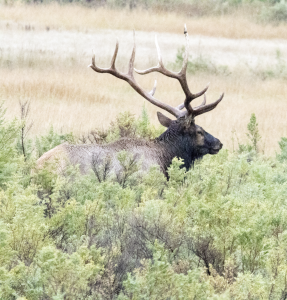
Hunters Needed to Fight Chronic Wasting Disease

elk3The Montana Wildlife Federation is co-hosting a series of informational meetings with Montana Fish, Wildlife and Parks to better inform hunters in northwest Montana how to help limit the spread of deadly Chronic Wasting Disease in big game.

“As hunters, we know that Chronic Wasting Disease is the most serious threat to our deer, elk, and moose that we face,” said Nick Gevock MWF conservation director. “It’s absolutely vital that as many hunters as possible learn what steps we must take to keep this disease as limited as possible, especially since it’s recently shown up in northwest Montana.”

Chronic Wasting Disease, or CWD, is a degenerative neurological disease that affects deer, elk, and moose. It is caused by misshaped proteins, or prions, and is spread in urine, feces and other bodily fluids. The diseases cause animals to lose cognitive function and is always fatal.

It was first detected in Montana in 2017 and has now shown up in white-tailed deer in and around Libby. Montana FWP has taken aggressive steps to learn how prevalent CWD is in the area, and to reduce deer numbers to limit its spread. Those include issuing 600 white-tailed doe “B” licenses in the area. Harvested deer will be quartered and held in a cooler while they’re tested for CWD.

MWF has donated 52 game bags for the special hunt and is working to get hunters involved in these efforts to reduce deer numbers in and around town.

“We know that hunting is the best, time-tested tool we have to manage wildlife, and this instance is no different,” Gevock said. “We want to make sure hunters are informed of how to handle their game and are taking the proper steps to ensure we’re doing all we can to limit the spread of this deadly disease.”

Montana Fish, Wildlife & Parks staff will be in hand to provide information about chronic wasting disease (CWD), management plans and hunting season changes.

The meetings all run from 6 to 8 p.m. and are scheduled as follows:

Monday, Aug. 19 in Eureka at Glacier Bank, 222 Dewey Ave.

Wednesday, Aug. 21 in Polson at KwaTaqNuk Resort and Casino, 49708 U.S. Highway 93.

Thursday, Aug. 22 in Trout Creek, Lakeside Motel and Resort, 2955 MT Highway 200.

Monday, Aug. 26 in Kalispell, Montana FWP Region 1 Headquarters, 490 N. Meridian Rd.

Wednesday, Aug. 28 in Libby, Libby City Hall, 952 E. Spruce St, Suite 100.

Montana Hunting Groups Weigh in on Shoulder Seasons

levi saunders X5ty2Pfj4Rw unsplash Sixteen hunting groups from throughout Montana recently sent a letter to the Montana Fish and Wildlife Commission requesting that state biologists stick with the agreement when elk shoulder seasons were created and evaluate how they’re working. 

The groups included general wildlife groups, local sporting clubs, and archery hunting organizations. They expressed deep concern with elk shoulder seasons, which last half the year, in areas where elk populations are struggling. The groups also asked Montana Fish, Wildlife and Parks to abide by the performance criteria laid out when shoulder seasons were created and make sure they don’t replace the harvest during the general five-week rifle season. The letter calls for the agency to do a thorough review of the shoulder seasons after three full years of their implementation. 

“Four years ago when the Montana Wildlife Federation and other hunting groups agreed to the trial implementation of shoulder seasons we did so on the premise they would be a temporary action to reduce elk numbers to current population objectives and to improve the distribution of elk on the landscape,” the letter states. “Our understanding was that shoulder seasons were not meant to replace the general season harvest. That’s clearly stated in the performance criteria.”

MWF and other groups call for a collaborative group to take a look at the seasons, as well as a potential update to the statewide elk management plan and the population objectives in it.

In addition, MWF will be hosting a series of Hunter Roundtables in Butte and Missoula to help inform hunters about shoulder seasons and future elk management.

MWF Awarded Seat on Grizzly Council

adam willoughby knox snqARKTgoc unsplash
Photo by Adam Willoughby.

Montana Wildlife Federation Conservation Director Nick Gevock is among the 18 Montanans chosen by Gov. Steve Bullock to serve on the Grizzly Bear Advisory Council to help guide future management of our state animal.

“I’m thrilled to help bring the perspective of hunters, wildlife enthusiasts and conservationists to the grizzly council,” Gevock said. “This council is a chance to bring together Montanans from diverse perspectives to address the very real challenges of managing an expanding grizzly bear population.”

Bullock announced the council makeup recently after moving several months ago to create it. The group consists of farmers and ranchers, conservation interests, timber representatives and hunters. Its charge is to work to come up with innovative ways to reduce conflicts with grizzly bears and shape the future management of this valued native wildlife species.

Grizzly bears are Montana’s state mammal and were put on the federal Endangered Species Act list in 1975. More than four decades later, grizzlies have dramatically expanded their numbers and range in both the Northern Continental Divide Ecosystem and Greater Yellowstone Ecosystem populations. The grizzly bear populations in both of these areas have met the threshold to remove ESA protections for them, but last year a federal judge blocked the delisting in the Greater Yellowstone Ecosystem.

At the same time, grizzlies have dramatically expanded their range and are now found in many valleys, where they come into contact with homes, farms and ranches, livestock and crops. The spread of grizzlies has led to conflicts in some areas where they’ve shown up for the first time in decades.

The council is set to meet eight times in the next year to make recommendations. Its specific charge includes enhancing human safety, ensuring a healthy grizzly population, improving response to grizzly conflicts, engaging all partners in outreach and conflict prevention, and improving coordination between government agencies and with tribal partners.

“MWF and the National Wildlife Federation, as well as many other interests, have for several years been working on preventive measures that protect livestock, grizzlies, and people by reducing conflicts,” Gevock said. “I’m confident that the council can continue to build on that work and other measures that make a difference for people and bears, and I’m eager to get started.”

For more information, go to http://fwp.mt.gov/fishAndWildlife/management/grizzlyBear/gbac.html.

The governor’s press release on the council is at https://news.mt.gov/governor-bullock-announces-grizzly-bear-advisory-council-members


Hunter Roundtables

Marcushunting The Montana Wildlife Federation is hosting a series of hunter roundtables throughout the state in the coming weeks to focus on the current state of elk management in Montana. 

MWF, our affiliate organizations and sportsmen groups around the state have become increasingly concerned with the use of elk performance-based “shoulder seasons” throughout many parts of the state. Hunters are concerned about the effects the seasons have on elk presence on public lands, elk behavior and the future of our sporting opportunities. 

Shoulder seasons are rifle hunts that occur outside of the general five-week seasons in late October and November, and most run from Aug. 15 to Feb. 15. They were meant as a temporary tool to address elk herds that are over the targeted objective population, as well as to push elk off of private lands. 

The shoulder seasons are guided by performance criteria that include getting at least half of the harvest of newly recruited elk during the general season to ensure a strong harvest at that time of year. They are also supposed to be for districts where the elk population is well over objective. Shoulder seasons were proposed for three years on a pilot basis and are undergoing a review to ensure they’re meeting the criteria. 

But in several districts in western Montana’s Region 2, Montana Fish, Wildlife and Parks is proposing to extend the seasons in areas where the elk herds are at or under the objective population. 

MWF Conservation Director Nick Gevock will be reviewing how the shoulder seasons were implemented, the proposal before the Fish and Wildlife Commission for future seasons and the need for changes to the statewide elk management plan. The presentation will include ample opportunity for comments and discussion from hunters. 

The roundtables will be held in conjunction with local sportsmen and sportswomen organizations. The current schedule is as follows: 

Butte: Tuesday, Aug. 13, 6:30 p.m. in the gazebo at Stodden Park, just off Utah Avenue next to the Highland View Golf Course. The roundtable will be held in conjunction with the Skyline Sportsmen Association and the Anaconda Sportsmen’s Club and will include dinner. 

Missoula: Wednesday, Aug. 14, 6 p.m. to 8 p.m. at Goodworks Ventures, 129 W. Alder St. in downtown Missoula. The roundtable is being held with MWF affiliate Hellgate Hunters and Anglers. 

Tell Your Story

Hunting INSTA Conservation and protection of our wildlife, public lands, and public access doesn’t just happen; people make it happen. MWF knows that navigating the numerous issues and policies that affect conservation can be challenging and daunting. We’ll walk you through the basic information you’ll need to comment on land use plans and advocate for conservation. MWF has read the whole Resource Management Plan, created comment writing talking points, and have summarized the most important information.

Writing comments can be intimidating. When non-profits and action-based organizations ask for comments on government processes that tend to have 1,000-page documents with ample unknown abbreviations and legal language, it is hard to know where to start and to feel qualified to comment. Anyone and everyone is qualified. It is great if you are an expert or a professional conservationist, but there is no requirement to be one! Comments can be 100 pages long with intricate details, scientific evidence, and legal jargon, or they can be a few sentences explaining why you value hunting in a specific area or that you want to protect a place where you enjoy hiking or bird watching- the most important thing is that you tell your story. Personal comments give reasons for agencies to care about a place just as we do. Tell the agency who you are, where you are from, and how these big decisions impact your life. 

If you are rolling up your sleeves and wanting to dive in deep with your comment writing, the first place to start is with the resource management plan itself. These documents can typically be found online on websites, such as the BLM planning website. Annotate/read/skim/flip-through the document and educate yourself, formulate opinions, and contribute to conservation. There are multiple ways to submit comments. You can email comments directly, mail them in, or submit them online on the BLM planning website.

 More tips on how to write strong comments

Submit your comment on the Lewistown RMP

It isn’t always plain and simple if you have questions reach out to our Eastern Field Rep. Melissa Petrich @ mpetrich@mtwf.org.

Jeff Lukas – MWF Elk Campaign Manager

Jeff Lukas

Conservation Director

Jeff Lukas is a passionate conservationist who has been fishing and hunting his entire life. Whether it’s floating a small stream chasing trout, pursuing elk in the high country, or waiting in a blind for ducks to set their wings, Jeff is always trying to bring more people afield to show them what we are trying to protect. He loves being in the arena, and he will never shy away from conversations about the beautiful and unique corners of Big Sky country.